Khao tom, jok and pork floss: how to adapt a Thai-Chinese breakfast for your little one
Khao tom and jok make a great breakfast if you cut the salt, with no seasoning under 1. Salty sides like Chinese sausage, salted egg, pickled greens and fermented tofu are just a taste or wait. Plus 3 easy bowls.
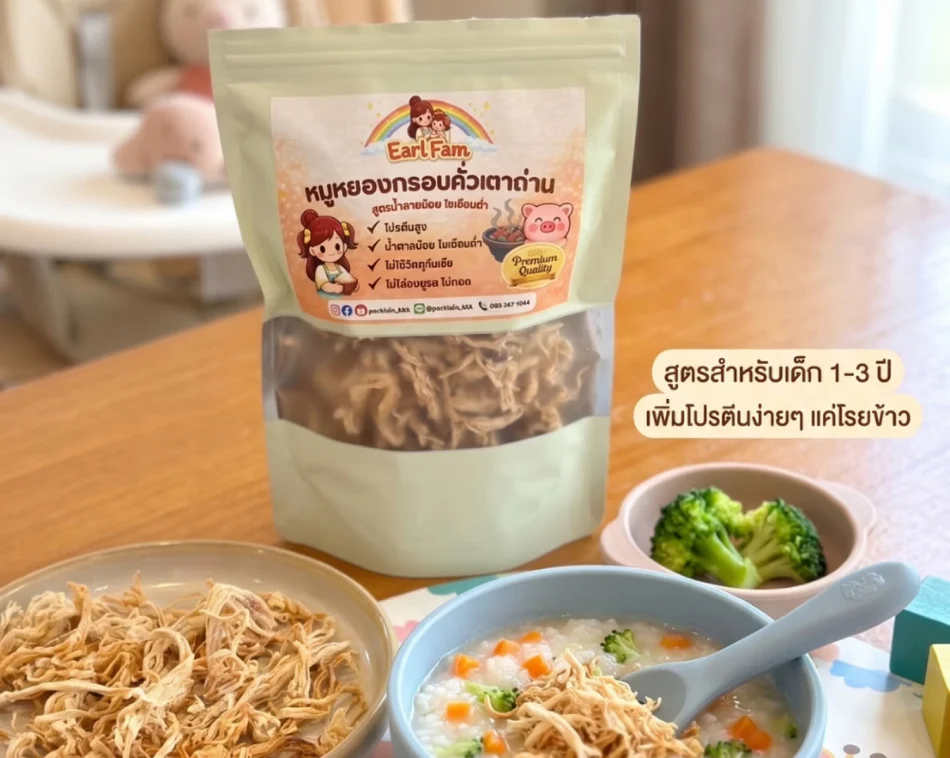
If you grew up with a khao tom breakfast table, you know how comforting it is. A hot pot of rice soup, the table covered in little dishes, pork floss, salted egg, pickled mustard greens, and Agong and Ama (grandpa and grandma, in Thai-Chinese families) always spooning the first bite for the grandkids.
Once you have a baby of your own, you want to pass this meal on, but you secretly wonder how much of those salty sides your little one can really have. Let’s go through it one by one: what’s fine to give, what’s just for a taste, and what should wait. Then we’ll finish with easy bowls you can make before the school run.
Khao tom, jok and khao tom kui: what’s the difference?
Quick Answer: Khao tom is cooked rice simmered in broth until soft, with the grains still visible. Jok is rice cooked so long it breaks down into a thick, smooth porridge. Khao tom kui is plain, clear rice soup eaten with lots of side dishes.
- Khao tom: like khao tom moo (pork) or khao tom pla (fish), with a clear broth, meat and vegetables in the bowl
- Jok: rice broken down into a thick texture, usually with pork meatballs, egg, shredded ginger and spring onion
- Khao tom kui: plain rice soup where the stars are the side dishes around the table: pickles, salty things and stir-fried vegetables
For little ones, jok is usually the easiest, because the texture is smooth and doesn’t need much chewing. Once your child chews better, you can move on to khao tom with whole grains.
Can my baby under 1 eat khao tom? Do I need to season it?
Quick Answer: Yes, from when they start solids, but don’t add salt, fish sauce, soy sauce or stock cubes at all. The NHS recommends babies under 1 get less than 1 gram of salt a day, and that you don’t add salt to your baby’s food or cooking water.
The Thai Department of Health also recommends that food for babies aged 6 to 12 months be not sweet, not oily, not salty. If you want some flavor, use homemade unseasoned broth from bones or vegetables.
A trick that really works in the morning: cook one pot for the whole family, then scoop out your baby’s portion before seasoning. The grown-ups add pepper and soy sauce in their own bowls. No need to wear yourself out making two pots.
If you’re just starting solids, see more ideas in Thai first food ideas and Signs your baby is ready for solids.
How much salt is okay for children aged 1 to 3?
Quick Answer: The NHS recommends no more than 2 grams of salt a day (about 800 milligrams of sodium) for children aged 1 to 3, across all meals in the whole day. That isn’t much at all, because salt is hidden in almost every seasoning and processed food.
This allowance runs out really fast, because fish sauce, soy sauce and salty foods like salted egg have more concentrated salt than you’d think. So the Department of Health recommends not adding fish sauce, soy sauce or seasoning sauce to food that’s already cooked, and using only a little seasoning while cooking.
Simple tricks you can do at home:
- Get flavor from fresh ingredients, like homemade bone broth, pumpkin, carrot and corn, which are naturally sweet
- Add a little young ginger, spring onion or coriander for aroma, instead of extra salt
- Keep stock cubes and seasoning powder out of your child’s bowl
Thai-Chinese side dishes: which to give, which just to taste, which should wait
Quick Answer: Omelet, stir-fried vegetables and boiled egg are fine if lightly seasoned. Pork floss, a little at a time. Kun chiang, salted egg, pickled mustard greens and fermented tofu are very salty: just a taste once in a while for ages 1 to 3, and avoid under 1.
| Side dish | Under 1 | Ages 1 to 3 | Tip |
|---|---|---|---|
| Omelet / boiled egg | Fully cooked egg, no seasoning | Yes, lightly seasoned | Make the omelet with chopped veggies, no fish sauce needed |
| Stir-fried vegetables (Chinese kale, choy sum) | Boiled soft and chopped, no seasoning | Yes, lightly seasoned | Scoop out your child’s portion before adding oyster sauce |
| Pork floss | Wait | Yes, a little at a time | Sprinkle it into khao tom to soften, not eaten dry in big mouthfuls |
| Kun chiang (Chinese sausage) | Avoid | Just a taste once in a while | Cut into thin strips, never round slices |
| Salted egg | Avoid | Just a tiny taste | Use boiled egg instead |
| Pickled mustard greens / chai po (salted radish) | Avoid | Just a tiny taste | Keep it on the grown-ups’ side, let your child taste just the tip of a spoon |
| Fermented tofu (tao hu yi) | Avoid | Just a dab to taste | Very salty, keep it for the grown-ups |
The NHS lists sausages as one of the salty foods to avoid for little kids, and recommends processed meat only once in a while. Kun chiang falls into this group, and it’s sweet on top of that.
Don’t feel guilty if Agong spoons a little salted egg for the grandkid to taste. A taste to get to know the flavor is fine. Just don’t make it the main side dish every morning. Try telling the elders gently, “Just a tiny taste, please. Little ones can’t handle much salt yet.” Most of them understand.
Choking: what to watch out for
Quick Answer: Watch out for hard round pieces, like kun chiang cut into round slices, and dry, fluffy things like pork floss eaten in big amounts. The NHS recommends cutting sausages into short strips, halved lengthwise, or sliced as thinly as possible, and always sitting with your child while they eat.
- Kun chiang / sausages: peel off the skin, cut lengthwise, then into short, thin strips
- Crispy pork floss: sprinkle it into jok or khao tom first to soften. If you give it as a snack, give small pinches at a time, and have your child sit down to eat, not walk around eating
- Pa tong go (Thai-Chinese fried dough sticks): chewy and oily, so tear into small pieces or soak in khao tom to soften
- Have your child sit upright in a high chair or at the table, with an adult sitting with them the whole meal
Go to the hospital or call 1669 right away if your child chokes and can’t cough, cries without sound, has trouble breathing, has blue lips, or becomes drowsy. With symptoms like these, don’t wait and see.
Which pork floss suits kids? (What we actually use at home)
Quick Answer: Choose pork floss whose label says low sugar, low salt and no MSG, and still give it a little at a time. At home we use Earl Fam charcoal-roasted crispy pork floss for kids.
Photo: Earl Fam
This shop belongs to a friend of ours. We always keep some at home, because our little one loves crunchy things, so we give this instead of bagged snacks.
The label says it’s a low-sugar, low-sodium recipe with no preservatives, no MSG, not fried, and high in protein. The front of the bag says it’s a recipe for kids aged 1 to 3. We haven’t copied the nutrition numbers here. We suggest flipping the bag over and reading the label yourself every time.
We use it in 2 ways at home:
- Sprinkled on khao tom or jok in the morning. Just a small pinch gives a plain bowl some flavor, and our little one eats a lot more easily.
- As a crunchy snack instead of bagged snacks, for kids who love crunchy things. Put a little in a small cup and have them sit down properly to eat, rather than handing over the whole bag.
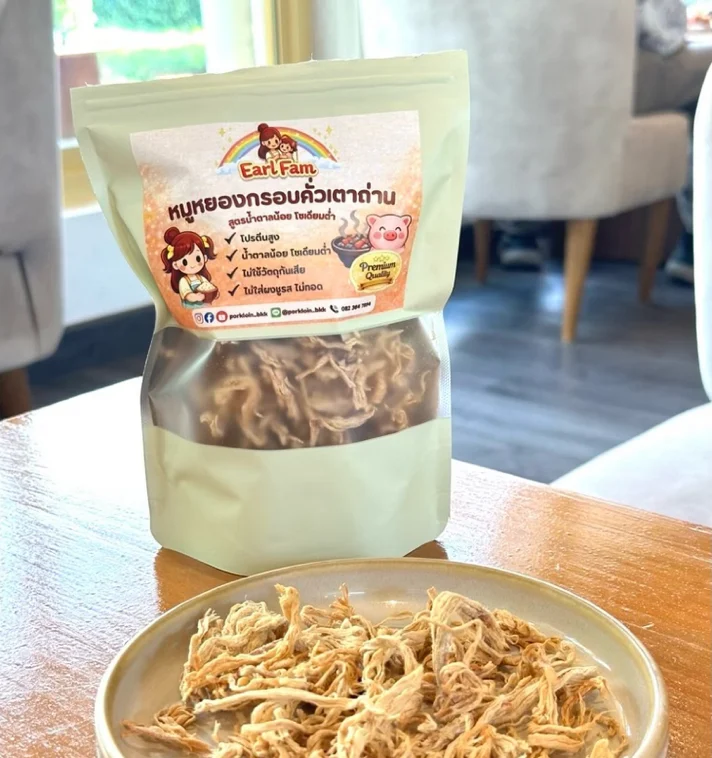 Photo: Earl Fam
The price when we checked (October 2026) was ฿183 on Shopee (regular price ฿229). Prices may change with promotions.
See Earl Fam pork floss on Shopee →
Even a kids’ recipe, pork floss still contains salt, so count it toward the day’s salt allowance, and don’t give it to babies under 1 yet.
3 easy bowls for weekday mornings
Quick Answer: Cook rice with unseasoned broth in one pot, then split it into different bowls, like chicken jok, egg jok, and fish and vegetable khao tom. It takes no more than 15 to 20 minutes if you prep the rice the night before.
Time-saving trick: cook extra rice the night before, or soak raw rice and freeze it. In the morning it breaks down much faster in the broth. If your child is still small, blend or mash it smoother for their age.
Minced chicken jok with a little spring onion
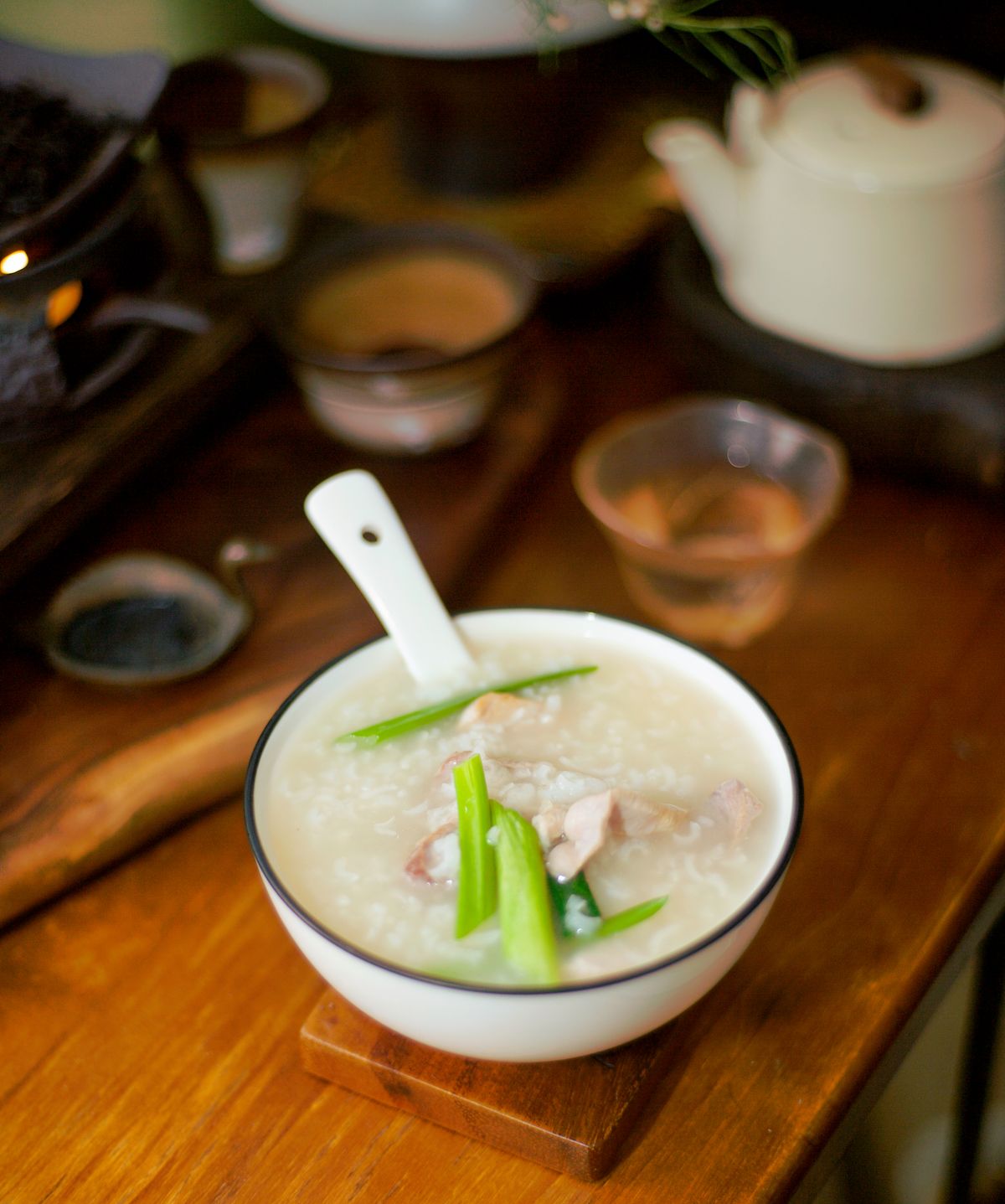 Photo: ivi nnnnnn / Pexels
Cook jok with chicken bone broth, add finely minced chicken breast or thigh, and stir until cooked. Sprinkle a little sliced spring onion for aroma. For a pretty color and natural sweetness, mashed steamed pumpkin goes really well in it too. When your child is a bit older, sprinkle a small pinch of kids’ pork floss on top.
Egg jok with shredded chicken
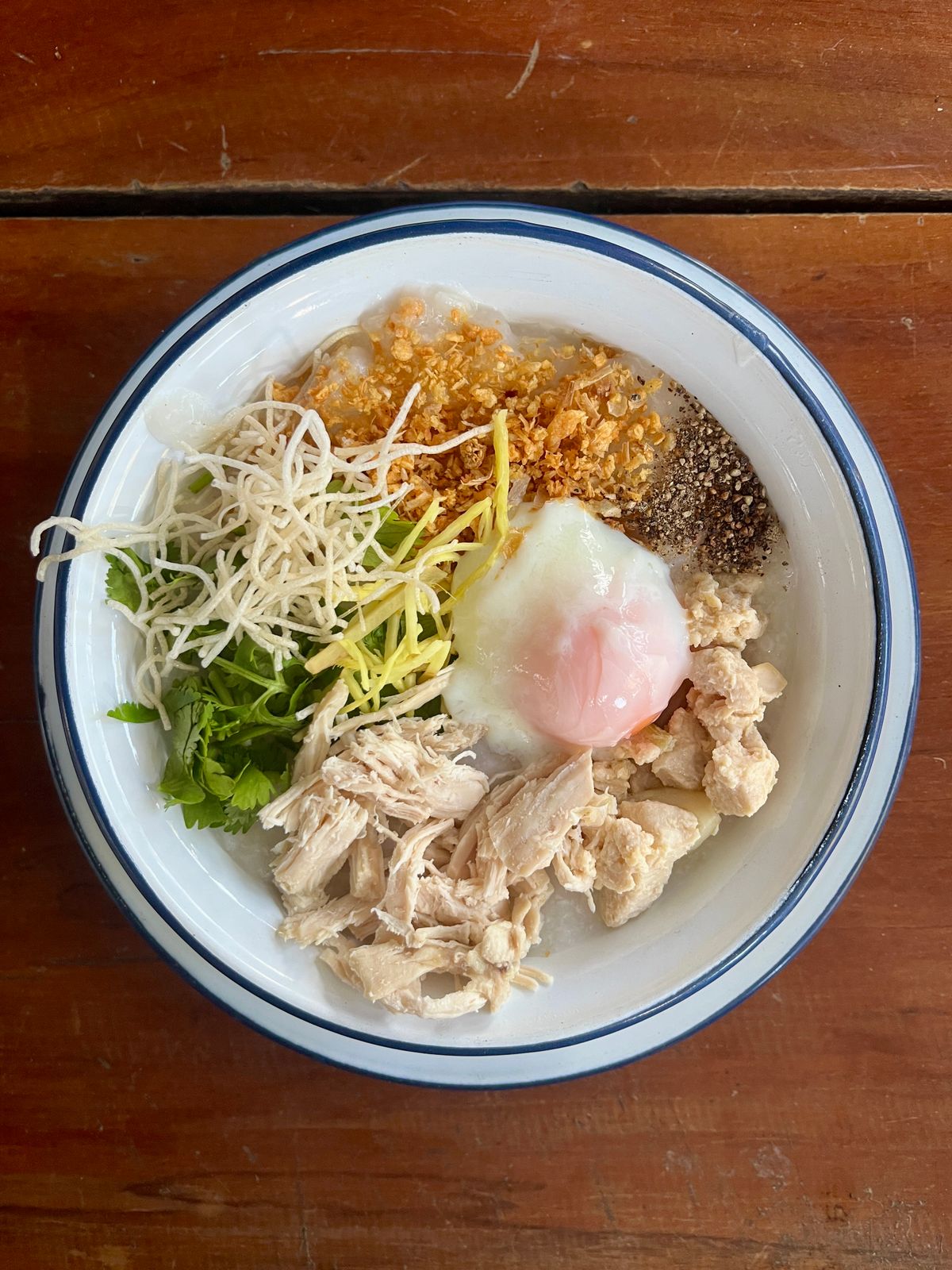 Photo: Archudio Studio / Pexels
This photo shows a grown-up bowl, loaded with fried garlic, pepper and shredded ginger. For your child’s bowl, leave those out, keeping just jok with finely shredded chicken, then beat an egg into the pot and stir until it’s fully cooked. For little kids, eggs must be fully cooked, not runny soft-boiled like in the photo.
Fish and vegetable khao tom
We couldn’t find a photo that really matches this dish, so we’ll describe it in words. Use white fish, such as sea bass (pla kapong), cut into small pieces, and simmer in broth with rice until the rice is soft. Add chopped napa cabbage or tamlueng (ivy gourd leaves), and a little shredded young ginger to take away the fishy smell. Before feeding, press every piece with your fingers to check for bones, then flake the fish small for your child’s age.
If your child is picky or won’t touch vegetables at all, read on in Picky eater? What to do. And for milk with breakfast after the first birthday, see Cow’s milk after your child turns 1
Your child’s khao tom table, in short
Quick Answer: Under 1: plain khao tom with no seasoning at all. Ages 1 to 3: lightly seasoned, focusing on egg, vegetables and fresh meat, with pork floss a little at a time. Keep the very salty things for an occasional taste.
You don’t have to give up the morning khao tom table because you have kids. Just scoop out your child’s portion before seasoning and keep the salty dishes on the grown-ups’ side. That’s all it takes for your little one to sit and eat together with the whole family.
Questions parents ask
01From what age can my baby eat khao tom for breakfast?
You can start when your baby starts solids at around 6 months, mashed or blended smooth for their age, and with no seasoning at all in the first year. As your baby gets better at chewing, gradually make it a little coarser.
02Can a 1-year-old eat pork floss?
Yes, a little at a time. Sprinkle it into khao tom first so it softens, because dry pork floss can get stuck in the throat. Choose one whose label says low salt and low sugar, and read the nutrition label every time.
03Can kids eat salted egg?
Salted egg is very salty. Avoid it for children under 1. For children aged 1 to 3, give just a tiny taste once in a while. If you want egg, a boiled egg or egg beaten into the jok is a better fit.
04Can kids eat kun chiang (Chinese sausage)?
Kun chiang is a processed meat that's both salty and sweet. Little kids should avoid it or have just a taste once in a while. If you do give it, cut it into thin, small strips, never round slices, because round pieces are a choking risk.
05What's the difference between khao tom and jok, and which suits kids better?
In khao tom you can still see the rice grains in the broth, while jok is cooked until the rice breaks down into a thick, smooth porridge. Little ones who are just learning to chew usually find jok easier. As they grow, switch to khao tom to practice chewing.
06How much salt should children aged 1 to 3 have a day?
The NHS recommends no more than 2 grams of salt a day (about 800 milligrams of sodium) for children aged 1 to 3, across all meals. That's less than many people think, because seasonings and processed foods have a lot of hidden salt.
Can't find what you're looking for?
Ask us anything about family life in Thailand. No name needed. We read every question, and the ones parents ask most become new guides.
Sources
- NHS: Salt: the facts (maximum salt by age)
- NHS: Foods to avoid giving babies and young children
- NHS Best Start in Life: Preparing food safely for babies
- Department of Health: Growing tall and well-proportioned EP.5, nutrition for infants 6 to 12 months
- Department of Health: Recipes for early childhood development centers, ages 1 to 5