Thalassemia screening before having a baby: why the doctor wants dad's blood too, even though you're both healthy
18 to 24 million Thai people carry thalassemia without knowing it. If both parents carry the same type, each baby has a 1 in 4 chance of having the disease. Testing both of you before pregnancy gives you time to plan.
“You want my blood too? But I’m not the one who’s pregnant.” Nurses in antenatal clinics hear this line all the time. And we’re just as confused: we’re both healthy, we’ve never been anemic, nobody in the family is sick, so why do we both need blood tests?
The answer lies in the word “carrier.” Let’s go through what a carrier is, why both of you need to be checked, what the tests are, and what your next steps are if the results aren’t normal.
Why do both husband and wife need thalassemia screening before having a baby?
Quick Answer: Because a baby can only have severe thalassemia if they get an abnormal gene from both dad and mom. Testing only one of you can’t tell you your baby’s risk.
Thalassemia is an inherited blood disorder where the body makes hemoglobin abnormally. A baby gets half their genes from dad and half from mom.
- Only dad or only mom is a carrier: the baby may be a carrier, but won’t have the severe form of the disease
- Dad and mom both carry matching types: the baby could have the disease
The numbers doctors usually explain are: if you’re both carriers, then in each pregnancy your baby has a 25% chance of having the disease, a 50% chance of being a carrier, and a 25% chance of being unaffected. And these chances start fresh with every pregnancy. Just because your first child is unaffected doesn’t mean the next one is definitely safe.
We’re both healthy. How can we be carriers?
Quick Answer: Most carriers are healthy with no symptoms, so they don’t know it. The Department of Medical Sciences states that as many as 18 to 24 million Thai people are carriers.
This number means that in a room of 10 people, several might be carriers without anyone knowing. Carriers live normal lives, work and exercise as usual, and nothing tells them they carry a hidden gene.
So “nobody in our family has it” can’t replace a blood test, because family members who are carriers don’t know it either.
Which types of severe thalassemia do doctors watch for?
Quick Answer: There are 3 types that are common in Thailand and are the focus of prevention: Hb Bart’s hydrops fetalis, Homozygous β-thalassemia and β-thalassemia/HbE.
According to the Department of Medical Sciences guidelines:
| Type | What it’s like |
|---|---|
| Hb Bart’s hydrops fetalis | The most severe. The baby has severe swelling and anemia, and dies in the womb or soon after birth |
| Homozygous β-thalassemia | Anemia starts in the first year of life, needs regular blood transfusions, risk of iron overload |
| β-thalassemia/HbE | Symptoms range from mild anemia to as severe as the second type |
This may be scary to read, but the goal of testing isn’t to frighten you. The goal is for you to know ahead of time, so you have time to decide, instead of finding out when your child is already sick.
What tests does thalassemia screening involve?
Quick Answer: It starts with screening (red blood cell indices MCV/MCH, the OF test, the DCIP test). If the results are abnormal, it’s confirmed with Hb typing, and some people need a DNA test.
The steps, following the Department of Medical Sciences guidelines, are roughly:
- Screening: a single blood draw, simple and inexpensive. It looks at red blood cell indices (MCV/MCH). The OF test helps screen for alpha and beta carriers, and DCIP is used to screen for HbE. If the screening is negative, you generally don’t need further tests.
- Hb typing: checks the type and amount of hemoglobin. It can confirm almost every type, except some alpha carrier types.
- DNA testing: used when Hb typing isn’t clear, or when the exact abnormal gene needs to be known.
You don’t need to remember the names of the tests. Just tell the hospital, “We’re planning to have a baby and would like thalassemia screening for both of us,” and the staff will sort it out. If you want other tests too, see the full list in Health checkup before having a baby
Testing before pregnancy vs. waiting until antenatal care: what’s the difference?
Quick Answer: Testing before pregnancy gives you more time to think and more options. During antenatal care, the system screens both mom and husband, but you’ll have less time to decide.
The good news is that if you’re already pregnant, you don’t need to worry much about costs. The NHSO (Sor Por Sor Chor, Thailand’s National Health Security Office) antenatal package includes thalassemia screening (MCV and/or DCIP) and confirmation tests. And since January 1, 2022, the Gold Card has also added thalassemia and syphilis screening for the husband or partner of a pregnant woman.
But the advantage of testing before pregnancy is time.
| Testing before pregnancy | Testing during pregnancy |
|---|---|
| Time to hear results, talk to your doctor and discuss things at home without rushing | You wait for both results while the pregnancy keeps moving forward |
| If you’re an at-risk couple, you have more options, such as discussing IVF with embryo testing | The main option is testing the baby in the womb |
| Costs depend on the hospital and your coverage, so ask first | Screening is covered under antenatal care benefits |
If it were us, we’d do it together with the preconception health checkup in one go, so there’s no nail-biting during pregnancy.
If we turn out to be an at-risk couple, what next?
Quick Answer: Your doctor will give you genetic counseling and explain the chances and options. Once you’re pregnant, the baby can be tested in the womb, and every decision belongs to the two of you.
The first time they hear the words “at-risk couple,” many people tear up. That’s completely understandable. Give yourself time with that feeling first, then take it one step at a time.
- Hear the results with your doctor together. Don’t let one person carry the news alone.
- Ask clearly which type each of you carries, how they match, and which type of disease your baby is at risk of
- Ask about your options, such as testing the baby during pregnancy, or IVF with embryo testing
- Know that the Department of Medical Sciences guidelines state clearly that if the baby is found to have a severe form, the decision depends above all on what the couple chooses
There’s no answer that’s right or wrong for every family. There’s only the answer that fits yours.
Talk to a doctor soon if…
Quick Answer: If both of your screening results are abnormal, someone in your family has thalassemia, or you’re already pregnant and haven’t been tested, see a doctor without waiting.
- Both of your screening results are abnormal, or the doctor says you need confirmation tests
- A parent, sibling or relative has thalassemia, or you’ve had a child with anemia who needed blood transfusions
- You’ve had a pregnancy where the baby had severe swelling, or died in the womb for unknown reasons
- You’re already pregnant and haven’t been tested: book antenatal care soon. Read more in Your first antenatal visit
- You have unusual symptoms during pregnancy, such as bleeding, severe tummy pain or unusual heavy swelling: go to the hospital right away
For the full picture of getting ready, covering your body, money and mind, read Getting ready for a baby: a guide for Thai moms.
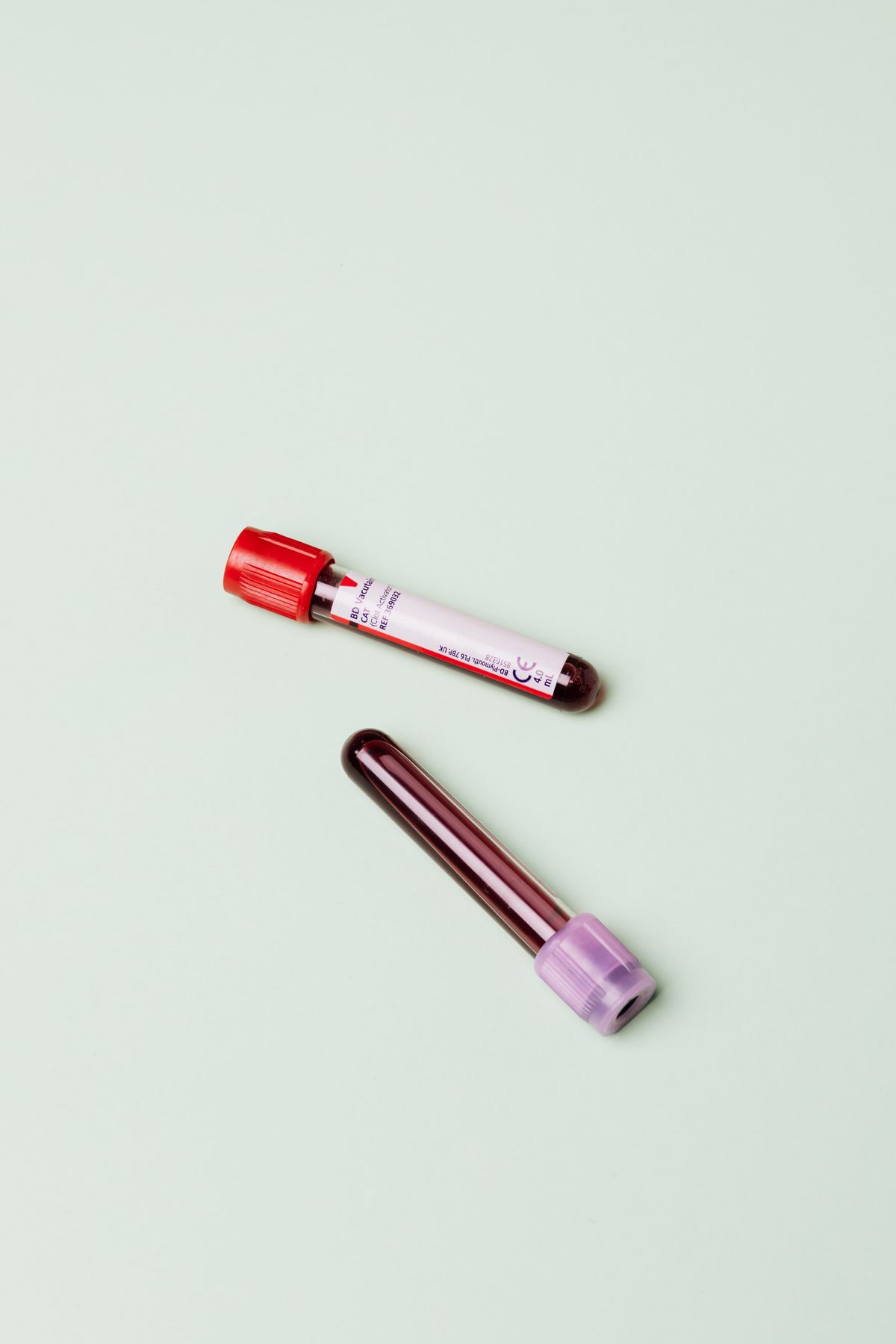
One tube of blood each takes just a few minutes, but it gives you the information you need before one of the biggest decisions of your life. Ask your partner to come along with you.
Questions parents ask
01Why do both husband and wife need thalassemia screening?
Because a baby can only have severe thalassemia if they get an abnormal gene from both dad and mom. Testing only one of you can't tell you your baby's risk.
02I'm healthy and have never been anemic. Do I still need testing?
Yes, you should. Most thalassemia carriers are healthy with no symptoms, so they don't know they carry a hidden gene. The only way to know is a blood test.
03If both parents are carriers, what's the chance our baby has the disease?
If you carry matching types, then in each pregnancy, your baby has a 25% chance of having the disease, a 50% chance of being a carrier, and a 25% chance of being unaffected. A doctor needs to look at your confirmed results to see which type you carry.
04What tests does thalassemia screening involve?
It starts with screening tests, such as red blood cell indices (MCV/MCH), the OF test and the DCIP test. If the screening result is abnormal, it's confirmed with Hb typing, and some people need a DNA test.
05Can I get thalassemia screening for free?
Once you're pregnant, thalassemia screening is part of the antenatal package. And since January 1, 2022, the Gold Card (Bat Thong, Thailand's universal coverage scheme) also covers screening for the husband or partner of a pregnant woman. For testing before pregnancy, ask the hospital you'll go to about the cost.
06If we turn out to be an at-risk couple, can we still have a baby?
Yes, you can. Your doctor will give you genetic counseling, and once you're pregnant the baby can be tested in the womb. Some couples choose IVF with embryo testing. Every decision belongs to the two of you.
Can't find what you're looking for?
Ask us anything about family life in Thailand. No name needed. We read every question, and the ones parents ask most become new guides.
Sources
- Department of Medical Sciences: Laboratory testing guidelines to support thalassemia control and prevention (revised edition 2019)
- Khaosod: NHSO board adds thalassemia and syphilis screening for partners of pregnant women, starting Jan 1, 2022
- Bangkok Biz News: NHSO free antenatal care for all schemes, with screening for husbands
- PPTV (information from the Phyathai Hospital group): over 22 million Thai people carry thalassemia