Teething Fussiness All Day: Teethers, Gum Gels or a Cold Cloth, What's Safe and Actually Helps
Soothe a teething baby by rubbing gums with a clean finger, a firm teether that isn't frozen, or a chilled cloth. The FDA and AAP advise against benzocaine gels and amber necklaces. Plus signs it's more than teething.
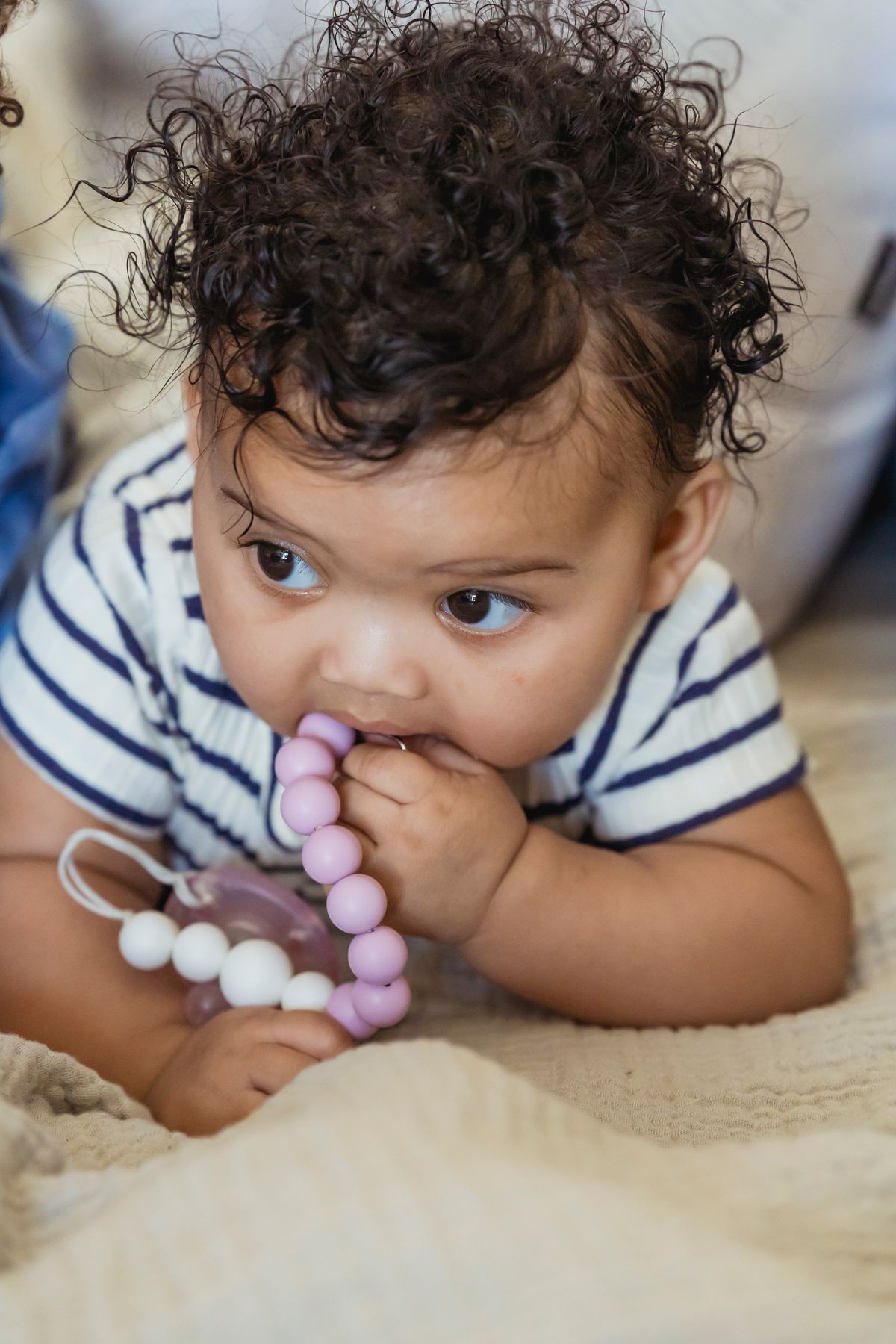
Your usually cheerful baby is suddenly fussy all day, drooling so much you change their shirt several times a day, chewing on hands, cloths and toys, and waking up crying more at night. One glance and the grandparents say, “Teeth are coming, for sure.”
This stage is hard on moms too. And when you look online, there are gum gels, amber necklaces and every kind of teether, and you don’t know what to trust. Let’s go through what actually helps and is safe, what doctors ask you to avoid, and when symptoms are “more than just teething.”
When do babies start teething, and which teeth come first?
Quick Answer: Most babies start teething around 6 months, but some start before 4 months and some after 12 months, and both are normal. The bottom front teeth usually come first.
The NHS gives a rough order:
| Tooth | Usually around |
|---|---|
| Central front teeth (often bottom before top) | 6 months |
| Teeth either side of the front teeth | 8 months |
| First molars | 12 months |
| Canines | 18 months |
| Second molars | 24 months |
Most children have all their baby teeth by 2 to 3 years. If your baby turns 1 without a single tooth, don’t panic, but mention it at the next check-up.
What are the signs of teething?
Quick Answer: Red, sore gums, lots of drool, wanting to chew, fussiness, poor sleep, one flushed cheek, ear rubbing and a drool rash around the mouth. Some babies have no symptoms at all.
Symptoms listed by the NHS and AAP:
- Red, swollen, sore gums where the tooth is coming
- More drooling, leading to a red rash around the mouth and chin
- Wanting to bite and chew everything
- Fussiness, irritability, trouble sleeping
- One flushed cheek, rubbing the ear on the same side as the tooth
For drool rash, gently dab away drool often with a soft clean cloth and use an absorbent bib, changing it when wet.
Does teething really cause fever or diarrhea?
Quick Answer: There may be a slight rise in temperature below 38°C, but a true fever and diarrhea aren’t caused by teething. If your baby has these, look for another cause.
This is the most common belief we hear: “Teething gives them a temperature,” “Teething gives them loose stools.” The grandparents say it out of love and experience, but here’s what the medical sources say:
- The NHS says there may be a slightly raised temperature below 38°C, and there’s no evidence teething causes diarrhea
- The AAP says teething doesn’t cause fever or diarrhea, and doesn’t cause unusual amounts of crying
This matters because 6 to 12 months is also when babies start putting things in their mouth, meeting more people, and getting sick more often. Assuming it’s “just teeth” can mean missing an infection that needs treatment.
Safe ways to help that actually work
Quick Answer: Gently rub the gums with a clean finger, offer a firm teether with no liquid inside, or a chilled damp cloth, without freezing anything solid.
What the FDA and AAP recommend:
- Gum massage. Wash your hands well and gently rub the gums in circles with a finger or knuckle. Many babies love it
- A firm teether. Rubber or plastic with no liquid or gel inside. The FDA stresses don’t freeze it, and stay with your baby the whole time they’re chewing
- A cold cloth. Wet a clean cloth, wring it out, chill it in the fridge and let your baby chew. The AAP warns against anything frozen solid, which can hurt sore gums
- After 6 months, the AAP says cold water sips from a soft-spouted sippy cup can help
- At bedtime, a comforting warm bath, a massage and the same routine every night help. See also 4-month-old waking often
If your baby has started solids, chilled soft steamed vegetables or fruit can soothe gums too, but choose soft pieces you can squash with your fingers and always supervise. Read about safe food pieces in Baby’s first meal.
What do doctors ask you to avoid?
Quick Answer: Gels or rubs with benzocaine or lidocaine, homeopathic tablets or gels, all teething necklaces and bracelets, liquid-filled teethers, and rubbing alcohol on the gums.
| Avoid | Why |
|---|---|
| Numbing gels with benzocaine | The FDA warns they can cause methemoglobinemia, where blood carries much less oxygen, which can be fatal |
| Rubs with lidocaine | The FDA warns of heart problems, seizures and severe brain injury, especially if too much is applied or swallowed |
| Homeopathic tablets or gels | The AAP advises against them, especially those containing belladonna |
| Teething necklaces or bracelets: amber, wood, marble, silicone | The FDA has reports of deaths and serious injuries from choking and strangulation |
| Liquid-filled teethers | The AAP advises against them |
| Alcohol on the gums | The AAP advises against it |
The AAP also says most numbing gels don’t help much anyway, because drool washes them away quickly. Baby gum products sold in Thailand come in many formulas, some with numbing agents and some herbal. Always ask a pharmacist or doctor before putting anything on your baby’s gums.
For pain or fever medicine, don’t go by what you’ve heard. Ask the doctor about the right type and dose for your baby’s weight. The AAP says moderate use is considered safe, but frequent use can cause problems.
Call the doctor or go to the hospital if…
Quick Answer: A fever of 38°C or higher, diarrhea lasting more than a day, unusual crying, or any other symptom that worries you. Don’t assume it’s just teething.
Go to the hospital now if…
- Drowsy, hard to wake, refusing milk or drinking very little
- Trouble breathing or fast breathing
- Seizures
- Lips or skin turning pale, gray or bluish after a numbing gel was used on the gums (call 1669)
- So much diarrhea or vomiting that your baby pees less, has a dry mouth or cries without tears
Call the doctor if…
- Fever of 38°C or higher
- Diarrhea for more than a day
- More crying than usual that won’t settle, or ear pulling with fever
- Very swollen gums, pus, or sores in the mouth
- Your baby is 12 months and still has no teeth (bring it up at a check-up)
Once the first tooth arrives, you can start keeping it clean. Ask the doctor or dental staff at the hospital about how to brush and which toothpaste suits your baby’s age at the next visit. The big picture of the first year is in Your baby’s first year guide, and if you’re in Chiang Mai, see Pediatric hospitals and clinics in Chiang Mai.
Teething passes one tooth at a time. The nights of crying and chewing soggy cloths will one day turn into the cutest two-toothed smile in the world.
Questions parents ask
01At what age do babies start teething?
The NHS says most babies start teething around 6 months, but some start before 4 months and some after 12 months. The first teeth are usually the bottom front ones, and most children have all their baby teeth by 2 to 3 years.
02Does teething really cause a fever?
The NHS says there may be a slightly raised temperature below 38°C, while the AAP says teething doesn't cause fever. If your baby has a fever of 38°C or higher, look for another cause and talk to the doctor.
03Does teething cause diarrhea?
The NHS says there's no evidence that teething causes diarrhea, and the AAP recommends calling the doctor if diarrhea lasts more than a day.
04Are baby gum gels safe to use?
The FDA and AAP advise against gels or rubs containing benzocaine or lidocaine for teething, because they help little and carry serious risks. Always ask a pharmacist or doctor before putting any product on your baby's gums.
05Do amber necklaces help with teething?
The FDA warns of reported deaths and serious injuries from choking and strangulation linked to teething necklaces and bracelets. The AAP advises against all teething necklaces, whether amber, wood, marble or silicone.
06Can I put a teether in the freezer?
Don't freeze it solid. The FDA says teething rings shouldn't be frozen, and the AAP says very hard objects can hurt tender gums. Use a chilled damp cloth or a firm teether with no liquid inside instead.
Can't find what you're looking for?
Ask us anything about family life in Thailand. No name needed. We read every question, and the ones parents ask most become new guides.