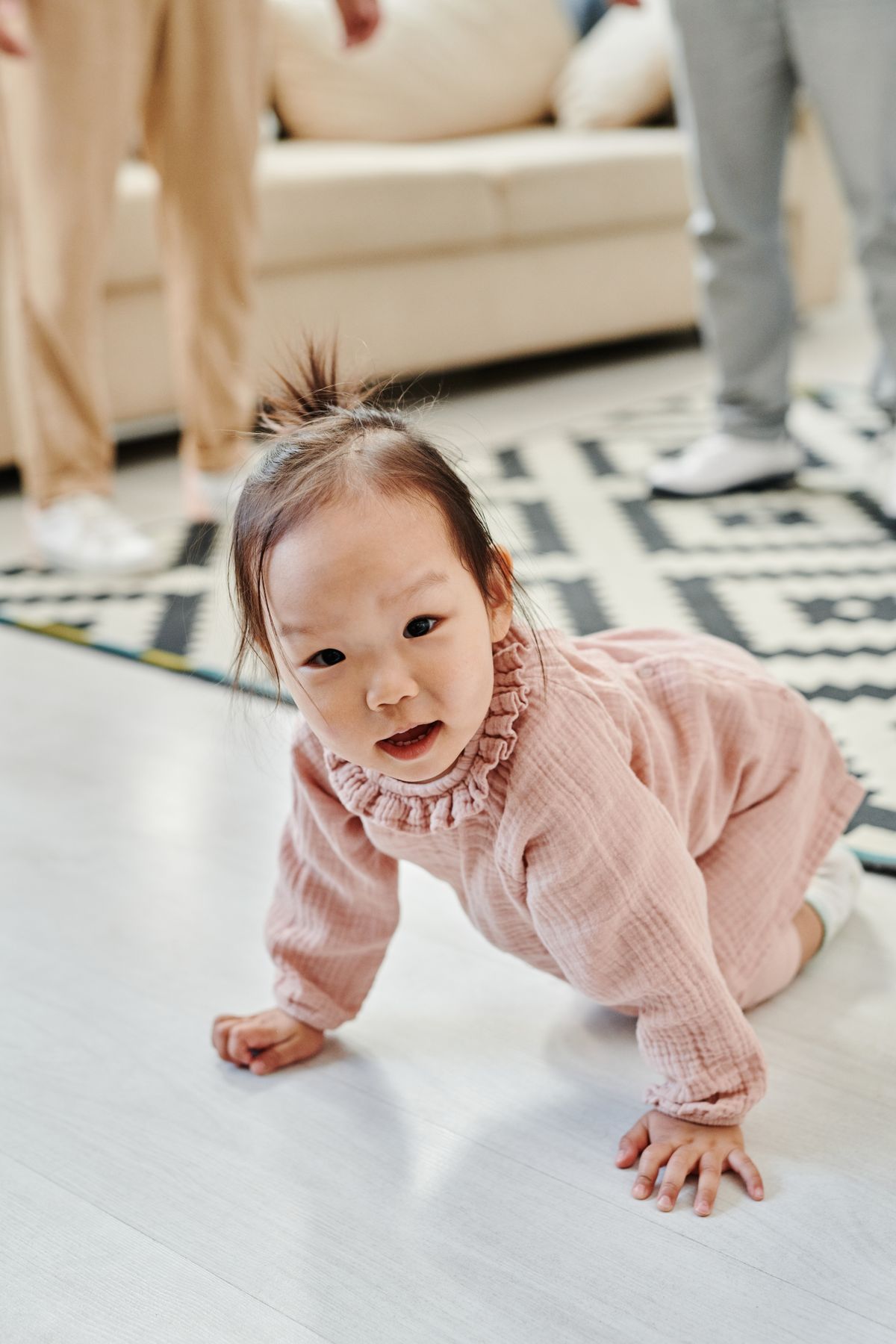
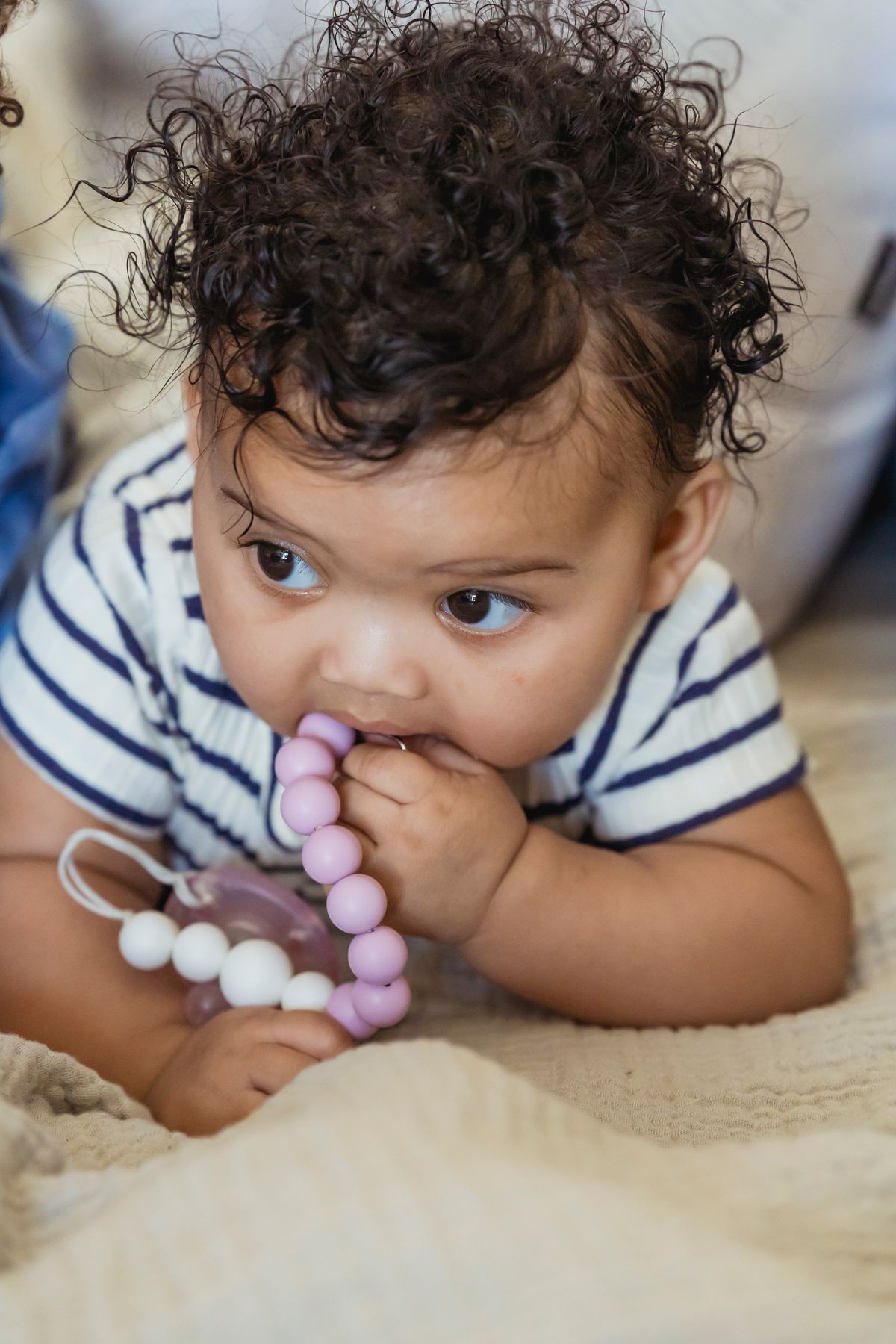
Your Baby Is Crawling: Look at Your Home From Their Eye Level, 10 Spots to Secure Before Something Happens
Baby starting to crawl? Check 10 spots in a house or condo: windows and balconies, tip-over furniture, cords, button batteries, medicines, water buckets, hot things and small objects, plus emergency numbers.
Yesterday your baby was rolling around on the mat. Today you turn around and, wait, they’re already at the TV cabinet, hand reaching for your phone charger. This is the stage many moms describe as “I can’t take my eyes off them for a second.”
But we can’t watch our babies 24 hours a day. What we can do is make the home “safe enough” before they get there. Try this first: crawl around your home at your baby’s eye level and see what you notice. Let’s go through the 10 main spots, for houses, townhouses and condos.
1. Windows and balconies (the number one spot in a condo)
Quick Answer: Lock windows and balcony doors so they open only a little, move climbable furniture away from windows, and don’t trust screens to stop a fall.
- The NHS recommends locks or catches that limit window openings to less than 6.5 cm, and making sure every adult knows where the keys are in case of fire
- The AAP recommends operable window guards that adults can open on windows above the first floor, and stresses that a screen won’t prevent a fall
- Move sofas, beds and toy boxes away from windows and balcony doors. Babies who are starting to pull up will use them as steps
- For sliding glass doors to the balcony, add an extra lock at the top out of reach, and don’t keep chairs or plant pots on the balcony that could be climbed to get over the railing
2. Furniture and TVs that can tip over
Quick Answer: Anchor cabinets, bookcases, dressers and TV stands to the wall, because babies who are starting to pull up will tug and climb.
The AAP recommends anchoring bookcases, dressers and TV stands to the wall. A flat-screen TV on a low cabinet is a commonly overlooked spot. Use an anti-tip strap to the wall, or wall-mount it.
In a rented condo where you can’t drill, talk to the owner, or move heavy items into a room you can close off, and keep heavy things in the bottom drawers.
3. Blind cords, electrical cords and plastic bags
Quick Answer: Tie blind and curtain cords up high and taut, hide electrical cords behind furniture, and keep plastic bags out of reach.
- The NHS warns that loose blind cords can quickly wrap around a baby’s neck. Tie them to a hook on the wall so they stay taut
- The AAP recommends cordless window coverings where possible, and keeping the crib or cot away from windows
- Phone chargers, fan cords and electrical cords: hide them behind furniture or use cord covers
- Plastic bags and shopping bags: keep them in a high drawer. The AAP warns they can suffocate a child
4. Outlets and fans
Quick Answer: Cover unused outlets with covers that aren’t small enough to swallow, and block outlets your baby keeps going to with furniture.
The AAP recommends outlet covers that aren’t a choking hazard for unused outlets. If your baby keeps heading for the same outlet, put furniture in front of it.
Almost every Thai home has a floor fan. For now, try a wall-mounted or tall fan, or place it away from where your baby crawls. Tiny fingers fit through fan grills more easily than you’d think.
5. Button batteries and magnets
Quick Answer: Button batteries and small magnets are very dangerous if swallowed. Keep them out of reach, and if you suspect your baby swallowed one, go to the hospital immediately.
- Button batteries are in TV remotes, air-con remotes, car keys, watches, musical toys and scales. The AAP and NHS warn they can cause severe internal burns quickly. Check that battery covers are screwed shut
- Small magnets from toys or fridge magnets: the NHS warns that if several are swallowed, they can stick together in the intestines
6. Medicines, balms and cleaning products
Quick Answer: Keep all medicines and cleaning products in a high, lockable cupboard, don’t rely on child-resistant caps, and if your baby swallows something, don’t make them vomit. Call 1367.
- The NHS says medicines are the most common cause of hospital admissions for poisoning in under-5s, especially paracetamol and ibuprofen
- That includes balms, inhalers and massage oils that Thai homes often keep by the pillow or on a low table. Move them all up high
- Toilet cleaner, dish soap and laundry pods often live under the sink. Move them up high or fit a cupboard lock. The NHS warns laundry pods come in toy-like colors
- The AAP advises don’t make your child vomit if you suspect poisoning. In Thailand, call the Ramathibodi Poison Center on 1367 for advice
7. All water: buckets, basins and the bathroom
Quick Answer: The NHS says babies can drown in as little as 5 cm of water. Empty buckets, basins and tubs every time, close the bathroom door, and never leave your baby alone in water, even for a moment.
Thai homes have water in many places we overlook: the bathroom bucket, a basin of soaking laundry, a water jar, the storage tank out back. The AAP says to empty containers after every use and keep the bathroom door closed.
During bath time, if the phone rings or someone’s at the door, wrap your baby in a towel and take them with you. The NHS stresses that bath seats aren’t safety devices, and never leave your baby even if an older sibling is in the bath too.
8. Hot things in the kitchen and on tables
Quick Answer: Keep hot water flasks, rice cookers, coffee cups and irons away from table edges and out of reach, and never hold hot things while holding your baby.
- The NHS says a hot drink can still scald a child 15 minutes after it’s made
- The AAP stresses never carrying hot items while holding your child, and keeping your baby in a playpen or high chair while you cook
- Rice cooker and hot water flask cords dangling off the counter can be pulled, tipping the whole thing over. Keep cords away from the edge
- Tablecloths hanging down can be pulled, bringing hot things down too. Put them away for now
- If your baby is scalded, cool it with plain cold water right away, cover loosely and always call the doctor, as the AAP advises
9. Stairs and baby walkers
Quick Answer: If you have stairs, fit gates at the top and bottom, mounted firmly to the house, and avoid baby walkers that can carry your baby down the stairs.
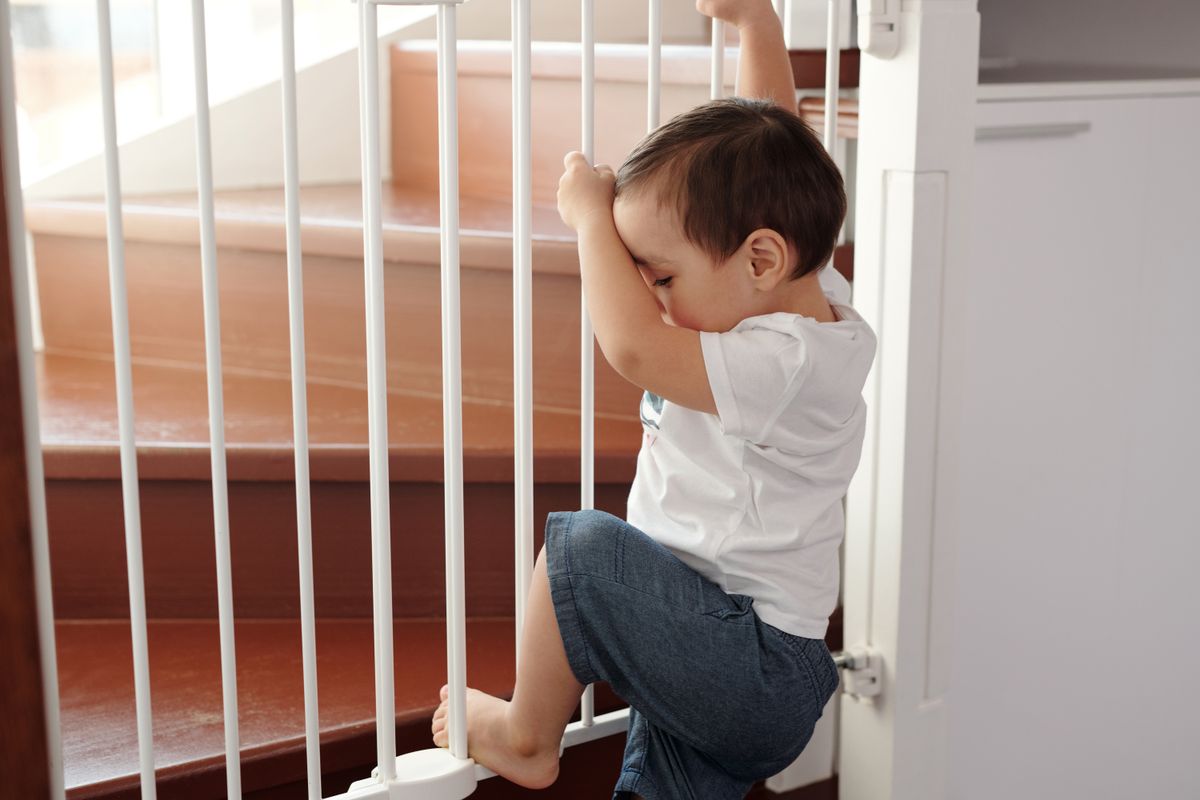
- The AAP recommends gates at the top and bottom of stairs once your baby starts crawling, and avoiding accordion-style gates that can trap an arm or neck
- The NHS recommends keeping gates up until your child is at least 2
- The AAP advises avoiding baby walkers because they can tip over or take children down stairs. Practicing crawling and pulling up on the floor is better
- High beds, sofas and changing tables: never leave your baby on them even for a moment. Babies this age roll and crawl fast
10. Small objects on the floor
Quick Answer: Babies this age put everything in their mouths. Keep coins, buttons, safety pins, bottle caps and older siblings’ toy parts off the floor, and check the floor often at their level.
The AAP recommends regularly getting down to your child’s level to check the floor, and the NHS says to keep older children’s toys with small parts away from babies. Try a house rule that older siblings’ small toys are played with at a table or in a room with a door.
If your baby puts things in their mouth a lot, don’t scold them. It’s normal development at this age. See the 6-month milestones checklist. Just make sure what’s within reach is safe enough.
Go to the hospital now if…
- You suspect your baby swallowed a button battery or magnet, even if they seem fine
- Choking, can’t cough, can’t breathe, crying without sound or turning blue (call 1669)
- They’ve swallowed medicine or a cleaning product and are drowsy, having a seizure, vomiting repeatedly or struggling to breathe (call 1669. If they seem fine, call 1367 for advice)
- A fall from a height followed by drowsiness, repeated vomiting, nonstop crying, or bleeding from the ear or nose
- Any near-drowning or face-down in water, even if they’ve recovered
- A large scald, or a scald on the face, hands or genitals
This is also when babies start eating, so read about choking-risk foods in Baby’s first meal. For trips out, see Best newborn car seats, and the big picture of the first year is in Your baby’s first year guide.
You don’t have to do all 10 in one day. Start with windows, medicines and water, then work through the rest one spot at a time. A safe-enough home is one where your baby gets to explore the world freely, and you get to breathe a little easier.
Checklist (tick and print)
Tick away, this device will remember.
10 baby-proofing spots, tick them off
Crawl around your home at your baby's eye level before you start
Numbers to stick on the fridge
Questions parents ask
01What do I need to baby-proof when my baby starts crawling?
The main spots are windows and balconies, furniture that can tip over, blind cords, electrical cords, outlets, button batteries, medicines and cleaning products, buckets and the bathroom, hot things, stairs, and small objects on the floor. Start by getting down to your baby's eye level.
02We live in a condo. What needs extra attention?
Windows and balcony doors matter most. Lock them so they only open a little, move climbable furniture away from windows and the balcony, and don't count on screens. The AAP says a screen won't prevent a fall.
03What should I do if my baby swallows a button battery?
Go to the hospital immediately, even if your baby seems fine, because button batteries can cause internal burns quickly. Don't wait for symptoms, and don't try to make your baby vomit.
04What should I do if my baby swallows medicine or a cleaning product?
Don't make them vomit. Keep the bottle or label, and call the Ramathibodi Poison Center on 1367 for advice. If your baby is drowsy, has a seizure or struggles to breathe, call 1669 or go to the hospital right away.
05How deep does water need to be for a baby to drown?
The NHS says babies can drown in as little as 5 cm of water. Empty buckets, basins and tubs after every use, and never leave your baby alone in the bathroom, even for a moment.
06Can I use a baby walker?
The AAP advises avoiding baby walkers, because they can tip over or carry a child down the stairs. Let your baby practice crawling and pulling up on a safe floor instead.
Can't find what you're looking for?
Ask us anything about family life in Thailand. No name needed. We read every question, and the ones parents ask most become new guides.