Newborn Jaundice: Does Your Baby Really Need Sunlight? What Doctors Actually Check, and Signs Not to Wait On
Newborn jaundice is common around days 3 to 5, but putting your baby in the sun is not a safe treatment. Doctors check bilirubin levels and treat with phototherapy. Know when to go to hospital.
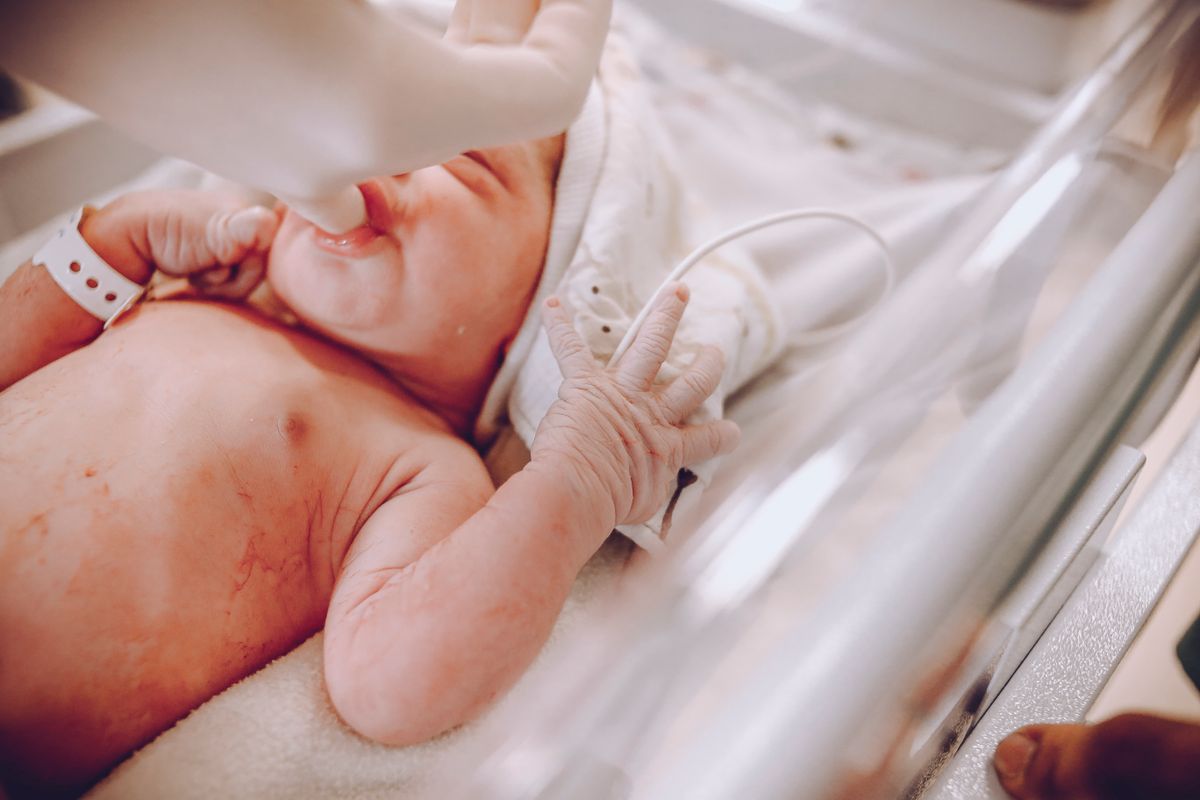
A few days after coming home from the hospital, an elder in the family says, “The baby looks yellow. Take them out in the morning sun.” Many moms carry their baby to sit by the window or in front of the house, because that really is what the older generation used to do.
We are not here to say the elders are wrong. We just want to share what pediatricians today actually look at when a baby is jaundiced, why they stopped recommending sunlight, and which kinds of yellowing you should not sit at home and wait on.
Why do newborns get jaundice?
Quick Answer: Because a yellow substance called “bilirubin” builds up in your baby’s blood, and a newborn’s liver cannot clear it as fast as an adult’s yet. It is very common in the first week.
In the womb, the mother’s liver handles bilirubin for the baby. After birth, the baby’s liver takes several days to take over this job fully. In the meantime, bilirubin stays in the blood, making the skin and whites of the eyes look yellow.
- It is usually most visible around days 3 to 5 after birth
- Most cases clear on their own within about 2 weeks
- Some breastfed babies may stay yellow longer, which a doctor needs to assess
- If your baby is getting little milk, for example while your milk has not fully come in yet, they may become more yellow (read more in My milk hasn’t come in yet: what to do)
Does sunlight really help?
Quick Answer: It is not recommended. The AAP (American Academy of Pediatrics) states clearly that “putting your baby in the sun is not a safe way to treat jaundice,” and Siriraj’s Faculty of Medicine also states that natural sunlight cannot treat jaundice.
To be fair, there is a small grain of truth in this belief. Certain wavelengths of light do help break down bilirubin, which is the same principle as hospital phototherapy. But real sunlight and phototherapy lights are very different.
- You cannot control the dose. You do not know how much of the helpful wavelength your baby is actually getting.
- Risk of overheating. Sriphat Medical Center at Chiang Mai University states that it does not recommend sunbathing babies because of the risk of body temperature going too high or too low. In Thailand’s intense heat, you need to be even more careful.
- Sunburn. A baby’s skin is very thin.
- False reassurance. This is the most important one. If we think “they’ve had sun, it’ll clear up,” we may take our baby to the doctor too late in cases where the bilirubin level really is high.
A Cochrane review of the research also concluded that there is not yet evidence that sunlight alone can treat jaundice. The only studies were in countries without phototherapy machines, which used sunlight through special filter film under the supervision of a medical team. That is a completely different thing from carrying your baby to sit in front of the house.
If an elder in your home suggests it, you could gently reply something like: “The doctor said sunlight can’t treat it, but natural light helps us see the baby’s skin color more clearly. I’ll check in the light, and if it’s very yellow, I’ll take the baby to get the level measured.” That way everyone feels at ease.
What do doctors actually check when a baby is jaundiced?
Quick Answer: Doctors do not just look at skin color. They measure bilirubin through the skin or from blood, then compare it with your baby’s age in hours, gestational age at birth and other risk factors.
Doctors usually look at several things together:
| What the doctor checks | Why it matters |
|---|---|
| Bilirubin level (skin meter or blood test) | The naked eye cannot judge yellowness accurately |
| Your baby’s age in hours | The same level means different things at different ages |
| Whether your baby was born full term | Premature babies have a lower threshold for phototherapy |
| How fast the yellowing appeared | If it rises very fast, the cause needs to be looked for |
| Feeding, wet diapers, stools | Babies pass bilirubin out in their stools |
| Mother’s and baby’s blood groups, and certain conditions | Some causes make jaundice worse than usual |
The AAP recommends that every baby have their bilirubin measured at least once before leaving the hospital, and that yellowing within the first 24 hours be checked immediately. If the hospital gives you an appointment to come back for a repeat measurement, please go, even if your baby seems fine.
What is phototherapy, and will it hurt my baby?
Quick Answer: Phototherapy means your baby lies under special lights with a suitable wavelength, which helps the body clear bilirubin faster. It does not hurt, and it is the standard treatment.
During phototherapy:
- Your baby wears only a diaper, with eye covers to block the light
- Nurses monitor body temperature and feeding
- Most moms can still feed on schedule, as advised by the medical team
- The NHS states that phototherapy usually takes about 48 hours, but every baby is different, and the doctor will re-measure regularly
Some hospitals may allow phototherapy at home in certain cases, depending on your baby’s age and bilirubin level, which the doctor decides. Very rarely, the level is so high that other treatment is needed as well.
How can you help your baby at home?
Quick Answer: What really helps is feeding often and keeping an eye on your baby’s skin color, feeding, wet diapers and stools.
- Feed 8 to 12 times a day, as the NHS recommends. The more milk your baby gets, the more often they poop, and the better they clear bilirubin.
- Count diapers. Unusually few wet or dirty diapers may mean your baby is not getting enough milk (see Signs your baby is getting enough breast milk).
- Check skin color in natural light. Gently press the skin on the forehead or tip of the nose and release, see whether it is yellow, and check the whites of the eyes.
- Notice how far down the yellow has spread. Yellowing usually starts on the face, then spreads down to the chest, tummy and legs. The further down it spreads, the more you should have a doctor measure the level.
- Do not give water or glucose water on your own. Young babies should get mainly milk. If you think they are not getting enough milk, talk to a doctor or nurse first.
Go to the hospital right away if…
Quick Answer: If your baby turns yellow within the first 24 hours, gets more yellow quickly, has pale stools or dark urine, or is drowsy and not feeding, take them to the hospital right away. Do not wait for your appointment.
Compiled from the NHS, AAP and Siriraj’s Faculty of Medicine:
- You see your baby is yellow before 24 hours of age
- The yellowing keeps increasing, or has spread down to the tummy, arms and legs
- Pale stools: creamy white, or the color of pale modeling clay
- Dark yellow or brown urine (normal baby urine should be almost clear)
- Your baby is very drowsy and hard to wake, not feeding much, or falls asleep unusually fast while feeding
- Your baby goes stiff, arches their back, has an unusually high-pitched cry, or has a seizure
- Your baby has a fever of 38 degrees Celsius or higher (read more in Fever in babies under 3 months)
- Diapers stay dry for an unusually long time
- Still yellow after 2 weeks of age: book a doctor’s visit to find the cause
Pale stools are a sign people often overlook. Take a photo of the diaper to show the doctor.
A quick summary to remember
Most newborn jaundice is not dangerous and clears on its own, but our eyes cannot tell how high the bilirubin level is. What really helps your baby is feeding often, going to your appointments to have the level measured, and going quickly if you see any of the warning signs above. As for sunbathing, you can skip it.
For the bigger picture on feeding, sleep and poop at this stage, read our guide to your baby’s first 3 months.
Asking the doctor again and again does not make you an anxious mom. It means you are taking the very best care of your baby.
Questions parents ask
01Does sunlight help newborn jaundice?
It is not recommended. The AAP states that putting your baby in the sun is not a safe way to treat jaundice, and Siriraj's Faculty of Medicine states that natural sunlight cannot treat jaundice. Babies also overheat or get sunburned easily.
02How many days does newborn jaundice take to clear?
Normal jaundice is usually most visible around days 3 to 5, and most cases clear within about 2 weeks. Some breastfed babies may stay yellow longer, but if your baby is still yellow after 2 weeks, have a doctor check them.
03What bilirubin level needs phototherapy?
There is no single number for every baby. The doctor looks at the bilirubin level together with your baby's age in hours, gestational age at birth and other risk factors, and compares it with a standard chart. So the doctor should make the call.
04Is phototherapy for jaundice dangerous?
Phototherapy is a standard treatment used worldwide. Special lights help your baby's body clear bilirubin faster. During phototherapy, your baby's eyes are covered and their body temperature is monitored, and you can still feed as advised by the medical team.
05My baby has breast milk jaundice. Do I need to stop breastfeeding?
Usually not. Feeding often, 8 to 12 times a day, helps your baby pass bilirubin out in their stools. If the doctor thinks temporary formula supplementation is needed, they will advise you case by case.
06How can I tell if my baby is jaundiced?
Gently press the skin on the forehead or tip of the nose and release, then look in natural light to see whether the skin there is yellow, and check the whites of the eyes. Yellowing usually starts on the face and spreads down to the chest, tummy and legs. The further down it spreads, the more you should have a doctor check.
Can't find what you're looking for?
Ask us anything about family life in Thailand. No name needed. We read every question, and the ones parents ask most become new guides.
Sources
- HealthyChildren.org (AAP): Jaundice in Newborns
- NHS: Jaundice in babies
- Faculty of Medicine Siriraj Hospital: Jaundice in newborns
- Sriphat Medical Center, Faculty of Medicine, Chiang Mai University: Jaundice in newborns
- Cochrane: Sunlight for the prevention and treatment of hyperbilirubinemia in newborns