Worried your baby isn't getting enough milk? Diaper signs tell you more than expressing to check
To see if your baby is getting enough breast milk, count wet and dirty diapers each day, watch weight and listen for swallowing. It tells you more than expressing or how full your breasts feel.
Late at night you sneak a try at expressing and get only a few drops, and your heart sinks. Then an older relative at home chimes in: “Crying like this, maybe you don’t have enough milk.” Almost every mom has this fear that baby isn’t getting full in the first month.
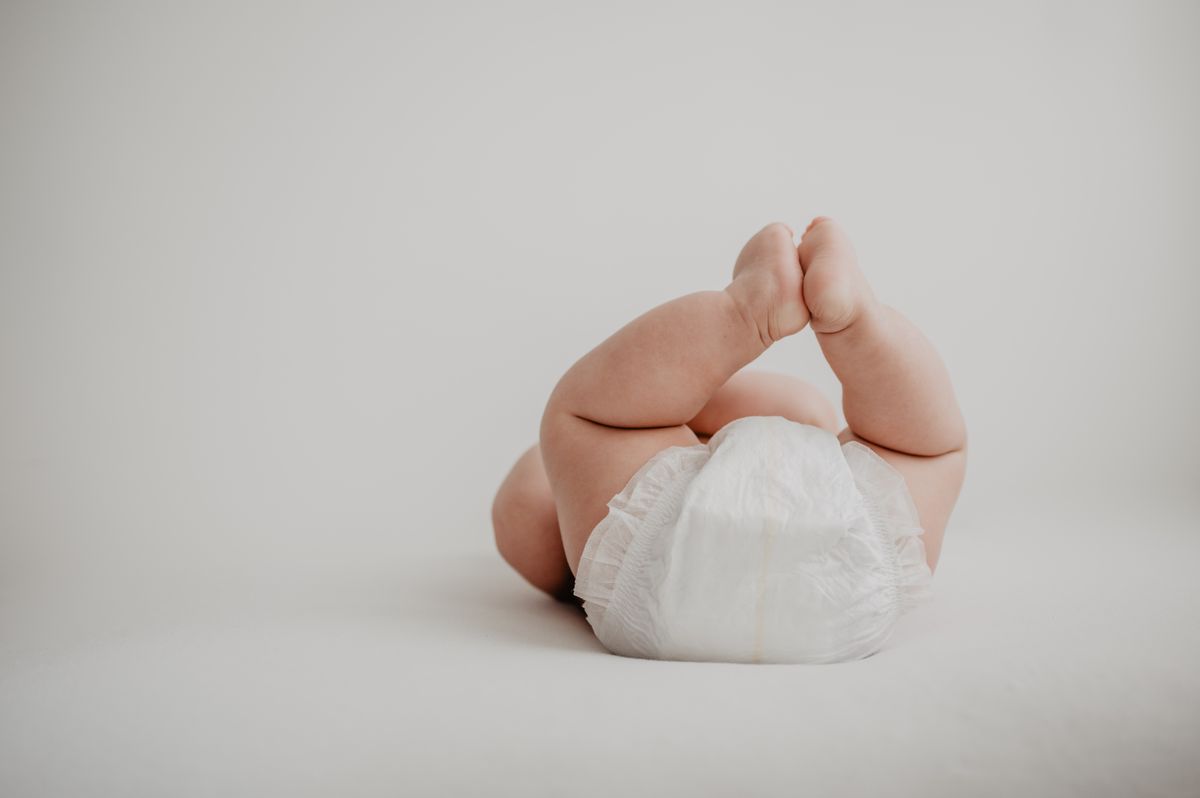
But there’s a much clearer way to check than expressing, and it’s right under your nose: your baby’s diapers. Let’s go through what to count, how many there should be on each day, and when to take baby to the doctor.
Why can’t expressing tell you if baby is getting enough?
Quick Answer: Because a baby who feeds well at the breast removes more milk than your hand or a pump can. So the amount you express isn’t the same as the amount baby actually drinks.
In the first 2 to 3 days after birth, your breasts make colostrum, which comes out in small amounts but is very concentrated, just right for a newborn’s tiny stomach. So getting only drops when you express is normal. It doesn’t mean your body has nothing for your baby.
The same goes for breasts that feel soft or not full. After a few weeks, breasts usually get softer because your body has adjusted production to match your baby. It doesn’t mean your milk is drying up. If you want to know more about the time before your milk comes in, continue to Your milk hasn’t come in yet after birth
How many wet diapers, and what kind of poop, means baby is getting enough?
Quick Answer: From day 5 onward, baby should have at least 6 heavy wet diapers a day and soft yellow poop at least 2 to 3 times a day.
The numbers below are a summary from the NHS, AAP and CDC, whose recommendations are similar:
| Baby’s age | Pee (wet diapers) | Poop |
|---|---|---|
| Day 1 to 2 | 1 to 3 diapers a day | Sticky blackish-green (meconium), 1 to 2 times |
| Day 3 to 4 | Gradually increasing | Starting to change to greenish-yellow, at least 2 times |
| Day 5 onward | At least 6, heavy and wet, pee clear or pale yellow | Yellow, soft or with small seedy bits, at least 2 to 3 times |
A tip from the NHS: disposable diapers absorb so quickly it’s hard to tell how wet they are. Try pouring 2 to 4 tablespoons of water into a new diaper and lifting it. That weight is what a “heavy wet” diaper feels like.
If you’re too tired to keep count (everyone is), try noting it on your phone or making tally marks on a piece of paper stuck to the fridge, one row per day, counting only pee and poop. It makes talking to the doctor or nurse much easier.
Besides diapers, what other signs show baby is feeding well?
Quick Answer: Baby feeds 8 to 12 times a day, you can hear swallowing, baby’s cheeks stay rounded rather than sucked in, and baby comes off the breast on their own looking relaxed.
- Frequency: newborns feed about 8 to 12 times in 24 hours, or every 2 to 3 hours. At some times baby may feed often, back to back, especially in the evening
- Sucking rhythm: quick sucks at first, then changing to long, slow sucks with swallowing now and then
- Cheeks: round and full while feeding, not sucked in
- After feeding: baby lets go of the breast on their own, hands relaxed, and looks content for about 1 to 3 hours
- Mom’s breasts: feel softer after feeding
If feeding makes your nipples very sore, or you hear clicking instead of swallowing, baby may not be latching deeply. Try 5 breastfeeding positions that help baby latch deeper
What should baby’s weight look like in the first two weeks?
Quick Answer: A small weight loss in the first 3 to 4 days is normal, but it shouldn’t be more than about 8 to 10 percent, and baby should be back to birth weight within about 10 to 14 days.
The best confirmation that baby is getting enough milk is being weighed at the hospital or a baby clinic at your appointments. The AAP recommends taking baby for a checkup within 48 hours of leaving the hospital to check weight. In Thailand, many hospitals schedule a checkup in the first week anyway. Don’t forget to bring your pink book (the Thai Mother and Child Health Handbook).
There’s no need to buy scales and weigh baby yourself every day. The numbers swing with diapers and feeds, and watching them will only make you worry for nothing. Check diapers every day, and let the doctor check weight at your appointments.
Does frequent crying and feeding mean you don’t have enough milk?
Quick Answer: Not always. If diapers and weight are on track, crying or wanting to feed often is usually normal baby behavior.
Babies don’t only feed at the breast because they’re hungry. Sometimes they feed for comfort, and at some times they want to feed several times back to back (cluster feeding), especially in the early evening. That’s actually baby’s way of stimulating your breasts to make more milk.
Some older relatives may say, “Give the baby a little water so they’ll feel full.” They really do mean well. But breastfed babies don’t need plain water, and Ramathibodi Hospital advises not giving water at this age, because water fills baby’s stomach without providing nutrients, so baby feeds less.
Call your doctor or go to the hospital right away if…
Quick Answer: If there are fewer diapers than expected, baby is drowsy or hard to wake for feeds, or jaundice is getting worse, don’t wait for your appointment.
Go to the hospital right away if
- Baby is drowsy, hard to wake, or refuses to feed for several feeds in a row
- From day 5, there are fewer than 6 wet diapers a day, or no pee for many hours
- Dry mouth, or a sunken soft spot (fontanelle)
- Jaundice is getting worse, spreading to the arms and legs, or comes with drowsiness. See more in Jaundice in newborns
- Fever in a baby under 3 months old
See a doctor or breastfeeding clinic soon if
- After day 4 you still see blackish-green poop, or fewer poops than expected
- Baby feeds for a very long time at almost every feed but still doesn’t seem full, and isn’t gaining weight
- Mom has very sore or cracked nipples, or a red, hot breast
Many public hospitals have a breastfeeding clinic that can help check positioning and latch. If you’re not sure, just call the hospital where you gave birth.
If baby really isn’t getting enough milk in the end, what next?
Quick Answer: Talk to a doctor or breastfeeding nurse to find the cause. Most cases can be fixed by adjusting the feeding position, feeding more often, and expressing or pumping more. And if you need to supplement with formula, it isn’t a failure on mom’s part.
Common culprits are a shallow latch, too much time between feeds, or mom and baby being separated for a long time, and almost all of these can be fixed. Sometimes the doctor may recommend supplementing temporarily, to keep baby safe while mom builds up more milk. Just follow the doctor’s advice, and don’t feel guilty. A full, safe baby is what matters most.
For the big picture of caring for your baby at this stage, read Your baby’s first 3 months: a guide
However tired you are, don’t forget: the fact that you’re sitting here counting diapers means you already care about your baby so much.
Questions parents ask
01How can I tell if my baby isn't getting enough breast milk?
Look mainly at diapers. From day 5, baby should have at least 6 heavy wet diapers a day and soft yellow poop at least 2 to 3 times a day, you should hear swallowing during feeds, and baby's weight should go up at checkups.
02If I only get a little when I express, does that mean I don't have enough milk?
Not necessarily. A baby who feeds well at the breast usually removes more milk than hand expressing or pumping. So the amount you express isn't a measure of how much milk baby is getting.
03How many times a day should a newborn pee?
In the first 2 days, baby may pee only 1 to 3 times a day, because milk is naturally still small in amount. From day 5 onward, there should be at least 6 heavy wet diapers a day, with pee that's clear or pale yellow.
04Is it abnormal for my baby to lose weight after birth?
Weight loss in the first 3 to 4 days is normal, but it shouldn't be more than about 8 to 10 percent of birth weight, and baby should be back to birth weight within about 10 to 14 days.
05Does frequent crying mean my baby isn't getting full?
Not always. Babies cry for many reasons, and it's normal for them to want to feed often in the evening. If diapers and weight are on track, it usually means baby is getting enough milk.
06How many times a day should my baby feed to get enough?
Newborns usually feed about 8 to 12 times in 24 hours. Feed whenever baby is hungry, there's no need to time it exactly, and look at diapers and weight together.
Can't find what you're looking for?
Ask us anything about family life in Thailand. No name needed. We read every question, and the ones parents ask most become new guides.