Constipation in pregnancy isn't just about too few vegetables: the culprit hiding in the vitamins your doctor gave you
Pregnancy constipation comes from hormones, a growing uterus and the iron in your prenatal pills. Don't stop them yourself. Adjust food, water and movement, and ask your doctor or pharmacist.
“I’ve been eating loads of vegetables, so why still nothing?” That line probably plays in a lot of moms’ heads while they sit waiting in the bathroom in the morning. You’re definitely not the only one. Cleveland Clinic says about 1 in 5 pregnant women get constipated, and for some it starts in the very first months.
What many people don’t know is that the culprit isn’t only eating too few vegetables. It may also be hiding in the supplement tablets you got from the antenatal clinic. We’ll walk you through 7 things, from the causes and safe fixes to when you should tell your doctor.
1. Why pregnant women get constipated more easily
Quick Answer: The hormone progesterone slows down bowel contractions, the growing uterus presses on the bowel, and many women eat less fiber, drink less water or move less during pregnancy.
Cleveland Clinic explains that these usually don’t come alone, they arrive as a gang:
- Hormones relax the bowel muscles, so food moves more slowly
- A growing uterus presses on the large bowel and rectum, especially noticeable in the third trimester
- Morning sickness means you eat little, drink little, and can’t face much fruit and veg
- Tiredness and moving less mean the bowel moves less too
- Iron in your supplements, the one people overlook most often
2. The hidden culprit: iron in your supplements
Quick Answer: Iron supplements really can cause constipation. The NHS says pregnant women taking iron supplements often get constipation or piles.
In Thailand, moms who go for antenatal care usually get iodine, iron and folic acid tablets under the Department of Health guidelines, and some get an extra separate iron tablet if blood tests show anemia. These supplements are very important for building mom’s blood cells and for baby’s development.
But one of iron’s most common side effects is exactly this: constipation. Cleveland Clinic explains that iron disrupts the gut bacteria that help break down waste, so some women notice their constipation gets much worse within a few days of starting supplements.
Think back to when your constipation started. If it lines up with starting your supplements or with your doctor adding iron, that’s important information to tell your doctor.
3. Constipated because of supplements: can I stop taking them myself?
Quick Answer: Don’t stop on your own. Tell your doctor or pharmacist you’re constipated so you can find an adjustment that still gets you enough iron.
The NHS advises asking your doctor whether you need to keep taking it, or whether you can switch to a different type of iron. Cleveland Clinic also suggests talking to your doctor about changing vitamins if you suspect iron is the culprit.
Simply put, let your doctor make this call, because your doctor knows your blood results. If you’re already anemic, stopping iron on your own may not be safe. You can ask your doctor like this:
- “My supplements are making me very constipated. Is there another type, or another way to take them?”
- “What do my blood results look like now? How much extra iron do I really need?”
- “If I use a laxative or fiber supplement, which one is suitable in pregnancy?”
Write your questions down first in your phone notes or in your pink book (the Thai Mother and Child Health Handbook), so you don’t forget once you’re in with the doctor, as we described in First antenatal visit: what to bring.
4. What to eat to make it easier to go
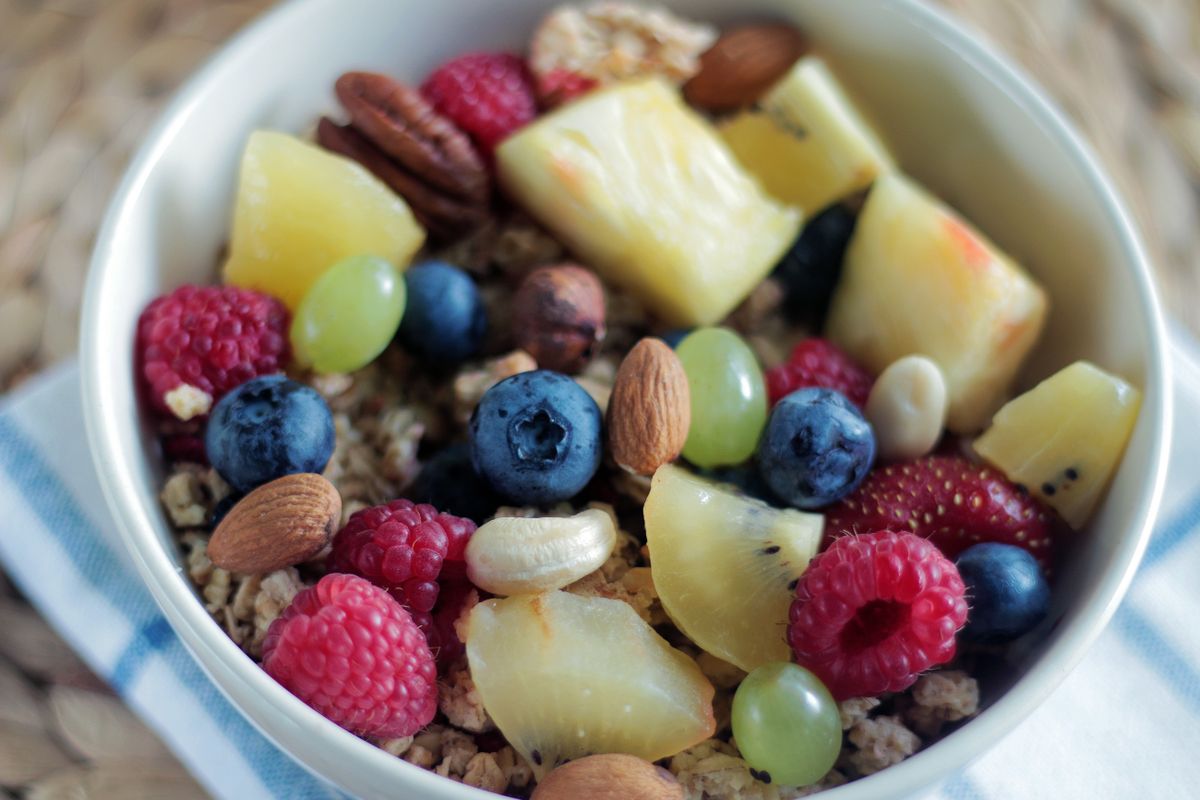
Quick Answer: Add fiber from vegetables, fruit, beans and whole grains, aiming for about 25 to 30 grams a day, and increase it gradually so you don’t get bloated.
Cleveland Clinic recommends 25 to 30 grams of fiber a day, but in real life, who has the energy to count grams? Just make sure every meal has some of these on the plate:
- Fruit, such as ripe papaya, oranges, guava, dragon fruit and prunes (Mayo Clinic recommends prune juice too)
- Vegetables: leafy greens, blanched vegetables, clear vegetable soup (gaeng jued)
- Beans and grains: brown rice, riceberry rice, oats, all kinds of beans
- Drinking yogurt or yogurt: the Drug Information Center at Mahidol University’s Faculty of Pharmacy recommends fermented milk products as one of the ways to help
Som tam fans can cheer, because the spicy papaya salad is a great vegetable dish. Just pick a clean stall, and avoid pickled crab or fermented fish sauce (pla ra) that hasn’t been cooked. Read the details in Can you eat som tam when pregnant?
5. Water and movement help more than you’d think
Quick Answer: Drinking about 1.5 to 2 liters of water a day and moving, such as walking or swimming, for about 30 minutes a day helps fiber do its job.
The Drug Information Center at Mahidol University’s Faculty of Pharmacy recommends drinking 1.5 to 2 liters of water a day along with fiber, and gentle exercise like walking or swimming for at least 30 minutes a day, because lots of fiber without enough water can actually make constipation worse.
Simple tricks that really work:
- Keep a water bottle beside you. In hot weather like ours, you sweat more than you think
- Split your walking into short stretches after meals if you can’t manage a long walk
- Cut back on Thai iced tea and sweet iced coffee, and swap in plain water sometimes (read about coffee in pregnancy)
- Go to the toilet as soon as you feel the urge, don’t hold it in
6. Laxatives in pregnancy: what to know first
Quick Answer: Some types of laxatives can be used in pregnancy, but a doctor or pharmacist should choose the type for you, and some types should be avoided.
The Drug Information Center at Mahidol University’s Faculty of Pharmacy sums it up like this:
- Start with adjusting food, water and movement first
- If that doesn’t work, bulk-forming laxatives and laxatives that draw water into the bowel are usually the first choice
- Avoid mineral oil, castor oil and some saline laxatives during pregnancy, because they may interfere with vitamin absorption or trigger contractions of the uterus
We’re deliberately not naming medicines or doses here, because everyone has different health conditions, current medicines and gestational age. Always ask a pharmacist or doctor first, and that includes herbal teas or traditional laxatives recommended by older relatives, because we don’t know what’s in the formula or how strong it is.
7. See a doctor soon if…
Quick Answer: There’s blood in your poop, severe abdominal pain, a very bloated belly with vomiting, or constipation lasting several weeks even after changing what you eat.
- Blood in your poop, or blood on the toilet paper. It may be piles or a small tear at the edge of the anus, so have a doctor look
- Severe abdominal pain, or pain that doesn’t go away even after going to the toilet or resting (in early pregnancy, read Lower abdominal pain in early pregnancy: how to tell what it is)
- A very bloated, tight belly, vomiting, not passing gas
- Constipation for several weeks even after doing everything
- Rhythmic cramping or frequent tightening of the belly, especially before 37 weeks
Constipation doesn’t harm the baby in your belly, but it really can make mom miserable. Don’t suffer in silence. Tell your doctor straight out that you’re constipated, no need to be shy. Doctors hear about this every day, and there’s always a way to help you feel better.
Checklist (tick and print)
Tick away, this device will remember.
Do every day
If it doesn't get better
See a doctor soon if
Questions parents ask
01What causes constipation in pregnancy?
Several things together: the hormone progesterone slowing down bowel contractions, the growing uterus pressing on the bowel, the iron in your supplements, and eating less fiber, drinking less water or moving less.
02Do iron supplements really cause constipation?
Yes. The NHS says pregnant women taking iron supplements often get constipation or piles. But iron is still essential, so tell your doctor or pharmacist so you can find a way to adjust, rather than stopping on your own.
03I'm very constipated. Can I stop taking my iron supplements?
Don't stop on your own. Iron helps prevent anemia, which affects both mom and baby. Tell your antenatal doctor you're constipated. They may change the type of supplement or suggest another approach that suits you.
04Can pregnant women take laxatives?
Some types can be used, but a doctor or pharmacist should choose them for you. The Drug Information Center at Mahidol University's Faculty of Pharmacy says bulk-forming laxatives and laxatives that draw water into the bowel are usually the first choice, and that mineral oil, castor oil and some saline laxatives should be avoided.
05How much water should pregnant women drink a day to help with constipation?
The Drug Information Center at Mahidol University's Faculty of Pharmacy recommends about 1.5 to 2 liters a day, together with eating fiber-rich food. If your doctor has asked you to limit fluids for another reason, follow your doctor.
06Is constipation in pregnancy dangerous for the baby?
Constipation itself doesn't harm the baby, but straining hard often can give mom piles or a small tear at the edge of the anus. If there's blood when you poop, severe abdominal pain, or constipation lasting several weeks, tell your doctor.
Can't find what you're looking for?
Ask us anything about family life in Thailand. No name needed. We read every question, and the ones parents ask most become new guides.
Sources
- NHS: Common health problems in pregnancy (constipation)
- NHS: Pregnancy, breastfeeding and fertility while taking ferrous sulfate
- Cleveland Clinic: Pregnancy constipation
- Drug Information Center, Faculty of Pharmacy, Mahidol University: Choosing a suitable and safe laxative in pregnancy
- Department of Health (Thailand): Stepping up iodine supplementation for pregnant women (iodine, iron and folic acid tablets)