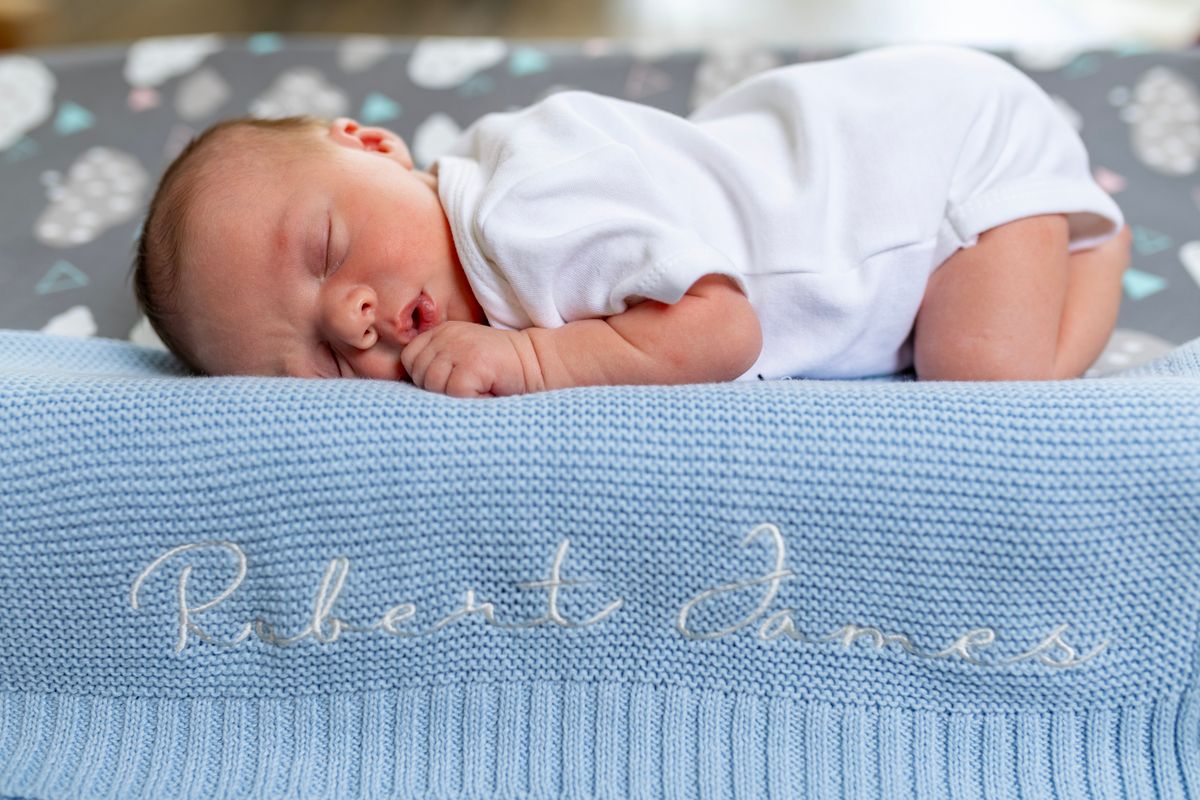
How do you play with a baby under a month old? 5 things you can do every day, no toys needed
Playing with a newborn needs no expensive toys: supervised tummy time, talking and singing, faces and black-and-white patterns, carrying them around the house, and stories. Screens aren't recommended yet.

Your baby is still so tiny. They wake up, eat, and fall asleep again. So a lot of moms think, “They can’t really play yet, let’s wait till they’re bigger.” Or they go the other way and order mobiles, developmental toys and flashcards until the house is full, afraid their baby will miss the “golden window.”
The truth is, newborns can play from the very first day home, and the best toys at this age are mom and dad’s faces, voices and arms. Here are 5 things you can do every day without buying a single thing, from birth to around 3 months.
Can newborns really “play”?
Quick Answer: Yes. Play at this age means looking, listening, touching and moving, in short sessions while your baby is awake and in a good mood.
The Thai Department of Health sums up early parenting as eat, hug, play, tell stories, and all of these fit into everyday life. WHO recommends babies get to move several times a day, especially through floor play with someone playing with them, and not be kept in a stroller or seat for more than 1 hour at a time.
But follow your baby’s cues. If they turn away, yawn, fuss or start crying, that means they’ve had enough. Take a break. No need to push to finish the time.
1. Tummy time while awake: how to do it safely
Quick Answer: Put your baby on their tummy only while awake and with an adult watching the whole time. Start with 3 to 5 minutes, 2 to 3 times a day, from the first day home.
 Photo: Catalina Herrera / Pexels
The AAP recommends slowly building up to a total of 15 to 30 minutes a day by around 7 weeks old, while WHO recommends at least 30 minutes a day for babies who aren’t crawling yet, split into short sessions throughout the day.
Tricks that make it easier:
- On mom’s or dad’s chest: lean back against a pillow and lay your baby tummy-down on your chest, so they can lift their head to look at you.
- After a diaper change or after waking up: the AAP says this is a good moment.
- Get down to your baby’s level on a mat or blanket on the floor, with your face right in front of theirs.
- If your baby doesn’t like it at first, keep trying a little each day. The AAP says they’ll slowly get used to it.
But this one is non-negotiable: for sleep, always put your baby on their back. If they doze off during tummy time, roll them onto their back in their own sleep space right away. Read more about safe sleep in Bed-sharing with a newborn: 7 things to check.
2. Talk, sing, then pause for your baby to respond
Quick Answer: Talk to your baby all day as if they understand, describe what you’re doing, sing lullabies, and then pause so your baby can respond with their eyes, movements or coos.
 Photo: Sarah Chai / Pexels
The AAP says a 1-month-old’s hearing is fully developed, and they may turn toward familiar voices, so mom’s and dad’s voices are what they’re most interested in.
Try these:
- At bath time: “Nice warm water. Wash the left arm, wash the right arm.”
- At diaper changes: sing “Chang” (the Thai elephant song), “Chan Jao Kha” or a lullaby grandma used to sing.
- When your baby coos: copy the sound back, then wait for them to “answer.”
Talking and waiting like this is exactly what slowly leads to your baby’s first real smile at you.
3. Let them look at your face and black-and-white patterns up close
Quick Answer: A 1-month-old sees clearly at 20 to 30 centimeters, loves faces most of all, and likes black-and-white or high-contrast patterns.
 Photo: RDNE Stock project / Pexels
- Your face is the first toy. Hold your baby so your face is about a forearm’s length away, and make different faces: smile, pucker your lips, slowly stick out your tongue.
- Make black-and-white patterns yourself. Draw circles, stripes and checkerboards with a black marker on white paper, and hold them up for your baby to see while awake.
- Slow tracking: slowly move the paper or your face from one side to the other so your baby can practice following with their eyes.
No need to cover the walls with pictures, and don’t leave paper or toys in your baby’s sleep space. Bring them out to play, then put them away.
4. Carry them around the house
Quick Answer: Carry your baby slowly around the house and name what you see, so they get new views, hear new sounds and stay close to you.
 Photo: Alicia Christin Gerald / Pexels
- Walk to the window: “That’s a tree. The leaves are moving because the wind is blowing.”
- Listen to kitchen sounds, running water, birds outside.
- Touch different fabrics, like cotton and towels, so your baby can feel them with their hands.
It’s hot here, so pick the morning or evening when the sun isn’t strong, and remember to always support the neck at this age, because your baby can’t hold their head up yet. Read more about other milestones at this age in First-month milestones.
5. Read or tell stories, even before they understand
Quick Answer: Yes, really. Your baby won’t understand the story yet, but they hear your voice, rhythm and tone, which builds a foundation for language.
 Photo: Sarah Chai / Pexels
The Thai Department of Health recommends parents tell stories to their baby from pregnancy, using a range of tones and finishing the story. WHO says that when babies are still, reading and storytelling with a caregiver is a good activity.
No storybooks? No problem. Read anything out loud to your baby, or tell the story of your day as a bedtime story. That’s sweet too.
What about screens? Can I put on cartoons or “brain development” videos?
Quick Answer: Not yet. WHO doesn’t recommend screens for children under 1, and the AAP recommends avoiding screens before 18 months, except for video calls.
- Video calls with grandparents in another province are fine, because it’s real back-and-forth with real people.
- “Baby brain development” videos with black-and-white images and music aren’t any better than your face and a hand-drawn black-and-white paper.
- If the adults at home leave the TV on, try asking to turn it off while you’re playing with your baby.
And moms watching videos themselves during a 3 a.m. feed: no need to feel guilty at all. The point is just not to use screens as a “toy” for your baby at this age.
What if some days you have no energy to play at all?
Quick Answer: That’s completely okay. Every time you hold, feed, change your baby and talk to them, that’s already play.
On really tiring days, just one thing is enough, or pass the baton to dad or the grandparents. Your baby benefits from everyone who loves them. Things worth mentioning to your doctor, like a baby who never looks at faces or doesn’t react to sounds, are covered in First-month milestones.
Playing with your baby at this age doesn’t take skill or equipment. Just be there, look at each other for a minute or two, and your baby is getting the very best.
Checklist (tick and print)
Tick away, this device will remember.
5 things you can do every day
You don't need to do them all every day. Pick some while your baby is awake and in a good mood.
Questions parents ask
01How should I play with my newborn?
Keep it simple and part of everyday life: supervised tummy time while awake, talking, singing, eye contact, letting them look at your face up close, carrying them around the house, and storytelling, in short sessions while your baby is awake and in a good mood.
02When can I start tummy time?
The AAP recommends starting from the first day home from the hospital, while your baby is awake and an adult is watching the whole time. Start with 3 to 5 minutes, 2 to 3 times a day, then slowly build up.
03How many minutes of tummy time a day?
The AAP recommends slowly building up to a total of 15 to 30 minutes a day by around 7 weeks old. WHO recommends at least 30 minutes a day for babies who aren't crawling yet, split into short sessions throughout the day while awake.
04Can newborns watch TV or phones?
We don't recommend it. WHO doesn't recommend screens for children under 1, and the AAP recommends avoiding screens before 18 months, except for video calls with family.
05My baby cries every time they're on their tummy. What should I do?
Try putting your baby tummy-down on your chest while you lean back, or start with just 1 to 2 minutes after a diaper change, then slowly add more. The AAP says if your baby doesn't like it at first, keep trying, and they'll slowly get used to it.
06Do I need to buy black-and-white toys?
No. Babies love faces most of all, and you can make black-and-white patterns yourself with paper and a black marker. Just make sure there are no small parts and don't leave them in your baby's sleep space.
Can't find what you're looking for?
Ask us anything about family life in Thailand. No name needed. We read every question, and the ones parents ask most become new guides.
Sources
- HealthyChildren.org (AAP): Back to Sleep, Tummy to Play
- WHO: Guidelines on Physical Activity, Sedentary Behaviour and Sleep for Children under 5 Years of Age (Recommendations)
- Mayo Clinic: Screen time and children, How to guide your child
- HealthyChildren.org (AAP): Developmental Milestones at 1 Month Old
- Thai Department of Health (Anamai Media): eat, hug, play, tell stories for child development