Bed-sharing with a newborn: if you're really going to do it, check these 7 things every night
Safest is baby on their own sleep surface in your room. But if your family does bed-share, here are 7 things to check every night, and the situations where you must never share a bed.
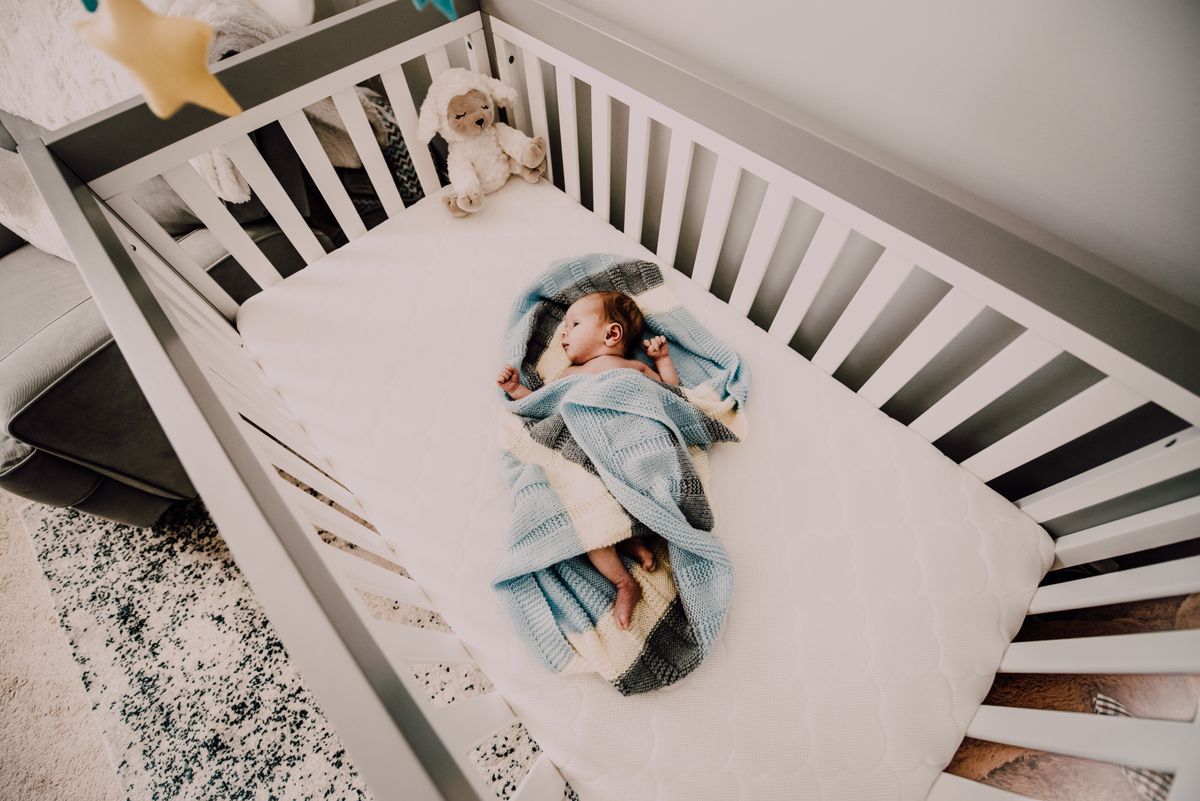
3 a.m., and baby is up to feed for the fourth time tonight. Mom’s eyes are about to close, and bringing baby into the same bed to lie next to you seems like the only way you’ll get any sleep at all. And plenty of families in Thailand have slept like this since grandma’s generation, both in beds and on mattresses on the floor.
We’re not here to judge anyone. We just want to say plainly what medical organizations recommend, and, if your family chooses to share a bed with baby, how to bring the risk down as far as possible. Knowing the safer way is always better than doing it without knowing anything.
First, what do doctors recommend?
Quick Answer: The AAP (American Academy of Pediatrics) recommends room-sharing, but on a separate sleep surface, for at least the first 6 months, and does not recommend bed-sharing.
The AAP says having baby sleep in the parents’ room, on their own sleep surface, cuts the risk of sudden infant death syndrome (SIDS) by up to about 50%. The UK’s NHS and Lullaby Trust say the same: the safest place is baby’s own cot or Moses basket, with no toys, blankets or pillows.
Samitivej Hospital in Thailand recommends the same approach: baby’s sleep surface separate from the adult bed, but in the same room. It also warns about accidents where an exhausted adult sleeps deeply and rolls onto the baby.
The option closest to sleeping together is putting a cot or baby mattress right up against mom’s side of the bed, within arm’s reach. Feeding is easy, but baby still has their own space.
Why newborns are at more risk than older babies
Quick Answer: Young babies can’t yet roll over or push a blanket off their face. The AAP says the risk from bed-sharing is 5 to 10 times higher in babies under 4 months.
The main risks come from these:
- An adult pillow or blanket covering baby’s face
- Baby slipping into the gap between the mattress and the wall
- A deeply asleep adult rolling onto baby
- A mattress so soft that baby’s face sinks into it
That’s why the first 3 months are when you need to be most careful.
Never share a bed with baby if…
Quick Answer: If anyone in the bed has drunk alcohol, smokes or has taken medicine that makes them drowsy, or if baby was premature or small, have baby sleep on their own surface that night. And never fall asleep with baby on a sofa, whatever the situation.
Summarized from the AAP, NHS and Lullaby Trust recommendations:
- Anyone in the bed has drunk alcohol. The AAP says the risk is more than 10 times higher. That includes beer at a party or with dinner.
- Anyone in the bed smokes, even if they don’t smoke in the bedroom, or mom smoked during pregnancy.
- Anyone has taken medicine that makes them drowsy, or used drugs. If you’re not sure whether a medicine makes you drowsy, ask a pharmacist.
- Baby was born before 37 weeks, or weighed under 2,500 grams at birth.
- A sofa or armchair. The AAP says the risk is up to 67 times higher when a baby sleeps with an adult on a sofa or soft chair. If you’re very sleepy while feeding, going to lie down on a bed you’ve already made safe is still much better than dozing off on the sofa.
1. Baby on their back, every time
Quick Answer: Put baby down on their back for both daytime and nighttime sleep, not on their front or side.
The AAP says babies who sleep on their backs are at much lower risk of sudden death than babies who sleep on their front or side. Some older relatives may worry the baby will choke or end up with a badly shaped head, but sleeping on the back is the position doctors around the world recommend.
2. A firm, flat mattress, not soft and saggy
Quick Answer: Baby needs to sleep on a firm, flat surface. A very soft mattress, a thick topper or a baby nest-style mattress isn’t suitable.
- Press down on the mattress where baby will sleep. If it sinks into a deep dip, it isn’t suitable.
- A Thai-style mattress on the floor is fine if it’s firm and flat, but you still need to check all the other points.
- The Lullaby Trust doesn’t recommend letting baby sleep on soft surfaces like baby nests or pods, even when placed on an adult bed.
3. Adult pillows and blankets away from baby
Quick Answer: Keep pillows, blankets, duvets and soft toys away from baby, because these are the things most likely to cover baby’s face.
- Baby doesn’t need a pillow.
- Mom’s blanket should come up only to mom’s waist, not pulled up to where baby is.
- Don’t use bolster pillows (หมอนข้าง), bumpers or pillows built up around baby.
4. No swaddling, and clothes suited to the temperature
Quick Answer: The NHS advises that if you share a bed with baby, you shouldn’t swaddle them. A baby sleeping bag is safer.
A swaddled baby can’t use their arms to push away something covering their face. And our homes here are hot anyway, so light clothes suited to the room temperature are enough. No need for thick covers at all.
5. No gaps baby can get stuck in, and no way to fall off
Quick Answer: Check there are no gaps between the mattress and the wall, headboard or bed frame that baby’s body or head could slip into.
- Push the mattress tight against the wall, or move the bed well away from the wall.
- The Lullaby Trust advises watching out for slatted or patterned headboards that baby could get caught in.
- If you sleep on a floor mattress, watch for gaps between it and the wall or a cupboard too.
6. No siblings or pets in the bed
Quick Answer: The NHS and the Lullaby Trust advise that no other children or pets should sleep in the same bed as a baby.
An older sibling who tosses and turns, or a dog or cat that likes to curl up beside you, has no idea there’s a tiny baby there. If the older child wants to sleep with mom, try having them sleep on dad’s other side, away from the baby.
7. Never leave baby alone on the bed, and everyone who sleeps next to baby knows the rules
Quick Answer: Don’t leave baby alone on an adult bed, even if you’re only stepping out for a moment. And everyone who shares a bed with baby needs to know all of these checks.
- The Lullaby Trust stresses never leaving baby alone on an adult bed.
- The more adults in the bed, the more pillows and blankets around baby, so check point 3 carefully.
- If the person sleeping next to baby is grandma or a nanny, every point on this page applies just the same. Feel free to send them this checklist.
What if you’re so tired you’re afraid of dozing off while feeding?
Quick Answer: Get the bed safe before you start night feeds, and if you wake up and baby is asleep, move baby back onto their back on their own sleep surface.
- Move pillows and blankets away before you start feeding.
- If you’re feeding in bed and get very sleepy, a bed you’ve already made safe is much safer than a sofa.
- Talk with your family about taking turns with baby at night, so mom can get a longer stretch of sleep sometimes.
- If you still haven’t found a comfortable feeding position, read Breastfeeding positions and latch.
Call a doctor or go to hospital straight away if…
Quick Answer: If baby is breathing abnormally, turns blue or pale, won’t wake up, or is floppy, call 1669 (Thailand’s emergency medical number) or go to hospital straight away.
- Difficulty breathing, or pauses in breathing
- Lips or face blue or pale
- Won’t wake up, or is unusually floppy
- Baby fell off the bed and is drowsy, vomiting or crying nonstop
If you want the big picture on sleeping, feeding and other danger signs at this stage, go on to The first 3 months guide. And if baby cries hard every evening and nobody in the house is getting enough sleep, see our piece on colic.
No parent gets enough sleep in the first 3 months. Simply choosing the safest option you can manage each night is already taking very good care of your baby.
Checklist (tick and print)
Tick away, this device will remember.
Don't bed-share tonight if any one of these applies
If any of these apply, have baby sleep on their own sleep surface next to the bed tonight
7 things to check before sleep every night
Questions parents ask
01Is it dangerous to share a bed with a newborn?
It carries more risk than having baby sleep on a separate surface in the same room. The AAP says the risk is much higher in babies under 4 months, so it recommends room-sharing on a separate sleep surface. If you do sleep together, follow the risk-reduction steps every night.
02Until what age should baby sleep in the parents' room?
The AAP recommends room-sharing on a separate sleep surface for at least the first 6 months. Samitivej Hospital recommends until 6 months to 1 year.
03When must you never share a bed with baby?
Never if anyone in the bed has drunk alcohol, smokes, uses drugs or has taken medicine that makes them drowsy, or if baby was born before 37 weeks or weighed under 2.5 kilograms at birth. And never fall asleep with baby on a sofa or armchair.
04What if I fall asleep while breastfeeding in bed?
If you know you might drift off, get the bed safe beforehand: move pillows and blankets away from baby and make sure there are no gaps baby can get stuck in. When you wake up, move baby back onto their back on their own sleep surface. This is much safer than dozing off on a sofa.
05Is sleeping with baby on a floor mattress safer than a bed?
A floor mattress helps with falls, but the main breathing risks are still there: pillows, blankets, a soft saggy mattress, and the gap between the mattress and the wall. So you need to check every one of the same points.
06Can I swaddle baby and share a bed?
The NHS advises that if you share a bed with baby, you shouldn't swaddle them. A baby sleeping bag is safer.
Can't find what you're looking for?
Ask us anything about family life in Thailand. No name needed. We read every question, and the ones parents ask most become new guides.