Pre-eclampsia: symptoms that look like "just tired" but shouldn't wait for your next appointment
A headache that won't go with medicine, blurred vision, pain under the breastbone, a face and hands that swell fast: pre-eclampsia warning signs that mean hospital that day, not your next checkup.
Everyone is tired in the third trimester. Your belly is big, you can’t sleep well, your legs swell in the evening, you get the odd headache, until you’re so used to it that you think “it’ll pass, I’ll mention it to the doctor at my next appointment.” But there’s a group of symptoms that look like ordinary tiredness when they’re really signs of pre-eclampsia, which can’t wait.
We’ll go through the warning signs one by one so they’re easy to check, and tell you plainly which ones you can look after at home and which ones mean grabbing your pink book (your Thai antenatal record book) and going straight to hospital.
What pre-eclampsia is, and why your doctor checks your blood pressure at every visit
Quick Answer: Pre-eclampsia is high blood pressure that develops during pregnancy, together with effects on other organs, such as protein leaking into the urine. It usually starts after 20 weeks, and it can happen after birth too.
The Faculty of Medicine at Chiang Mai University explains that it’s linked to the placenta implanting abnormally, which pushes blood pressure up to 140/90 mmHg or more. At 160/110 it’s considered severe, with a risk of bleeding in the brain. The World Health Organization estimates it affects about 3 to 8 percent of women giving birth worldwide.
The scary part is that the early stage usually has no symptoms at all. That’s exactly why the nurse checks your blood pressure and has you do a urine test every time you go for antenatal care. Going to every single appointment is the best protection there is.
8 warning signs that look like “just tired”
Quick Answer: A headache that won’t go, blurred vision, pain under the breastbone, swelling that comes on fast, sudden weight gain, vomiting, feeling very unwell, and shortness of breath. Any one of these means going to hospital that day.
- A headache that doesn’t go away with paracetamol. It’s different from a headache from lack of sleep because it’s severe and lingers. (Read about taking medicine in Can you take paracetamol when pregnant?)
- Blurred vision, seeing flashing lights or black spots. Many people think it’s from too much time on their phone, but if it comes on suddenly, you need to get checked.
- Pain just under the breastbone or under the right ribs. This is often mistaken for acid reflux or eating som tam that was too spicy. The NHS says heartburn that won’t go away can also be a warning sign.
- Face, hands or feet swelling up quickly. Legs swelling in the evening and going down after lying down to rest is normal. But swelling in the face, around the eyes, or rings suddenly not fitting is not.
- Sudden weight gain within a few days. Chiang Mai University gives the example that some women gain as much as about 4 kilos in a week, which is retained water, not from eating a lot.
- Nausea and vomiting in the third trimester. Morning sickness should have gone long ago. If the vomiting comes back toward the end, tell your doctor.
- Feeling very unwell in a way you can’t describe. Trust your own feelings.
- Shortness of breath. In severe cases this may be a sign of fluid building up in the lungs.
Which swelling is normal and which needs attention
Quick Answer: Swollen ankles in the evening that improve after lying down with your legs up are normal in pregnancy. Sudden swelling of the face and hands, or swelling with a headache and blurred vision, is swelling that means getting your blood pressure checked.
| Swelling that’s usually normal | Swelling that means going to hospital |
|---|---|
| Ankles, tops of the feet, in the evening or after standing a long time | Face, around the eyes, hands, swelling up fast |
| Comes on gradually, better after lying down with legs up | Comes on within a day or two, doesn’t go down |
| No other symptoms | With a headache, blurred vision, pain under the breastbone |
Hot weather like ours makes legs swell even more easily. But don’t blame the weather and overlook the symptoms in the right-hand column.
Who is at higher risk of pre-eclampsia?
Quick Answer: A first pregnancy, being 40 or older, carrying twins, existing high blood pressure, diabetes, kidney disease or an immune condition, having had it in a previous pregnancy, a family history, and a body mass index of 35 or higher.
The NHS and the Faculty of Medicine at Chiang Mai University list similar risk groups. The NHS adds the case where this pregnancy comes more than 10 years after the last one. But we should say up front that women who aren’t in any risk group can get it too.
If you’re in a high-risk group, your doctor may prescribe low-dose aspirin to take every day from early in pregnancy, which the WHO and NHS recommend for this group. To stress it again: this is a medicine that a doctor must assess you for and prescribe. Never buy it and take it yourself.
How dangerous is it, and what will the doctor do?
Quick Answer: Without care, it can lead to seizures, bleeding in the brain, liver and platelet problems (HELLP), and a failing placenta. But when it’s found early, doctors can manage it by controlling blood pressure and monitoring you closely.
Once you get to the hospital, this is roughly what to expect:
- Your blood pressure is checked again, plus a urine test and blood tests for liver, kidney and platelet levels
- Baby’s heartbeat is checked, and there may be an ultrasound to look at growth
- If it’s mild, you may be sent home but booked in more often
- If it’s severe, you may need to stay in hospital and be given blood pressure medicine or anti-seizure medicine
- The only cure is giving birth. The doctor will weigh mom’s safety against how far along the baby is
That’s why in the third trimester it’s a good idea to pack your hospital bag early, in case you have to stay in hospital without warning.
Do you still need to watch out after the birth?
Quick Answer: Yes. Pre-eclampsia can happen after birth, mostly within the first two or three days, but Cleveland Clinic says it can come later, even several weeks after.
After the birth we focus so much on the baby that we forget about ourselves. If you get a severe headache, blurred vision, shortness of breath or more swelling after you get home, don’t just assume it’s lack of sleep. Go back to the hospital where you gave birth right away.
Go to hospital straight away if…
Quick Answer: You have even one of the symptoms in the checklist above. Go to the labor ward or emergency room, don’t wait for your appointment. If there are seizures or loss of consciousness, call 1669 (Thailand’s emergency medical number).
- A severe headache that won’t go, blurred vision, seeing flashing lights
- Pain under the breastbone or under the right ribs
- Face, hands or feet swelling up fast
- Shortness of breath, seizures or loss of consciousness
- Baby moving less as well (read more in Counting baby’s kicks in your pink book)
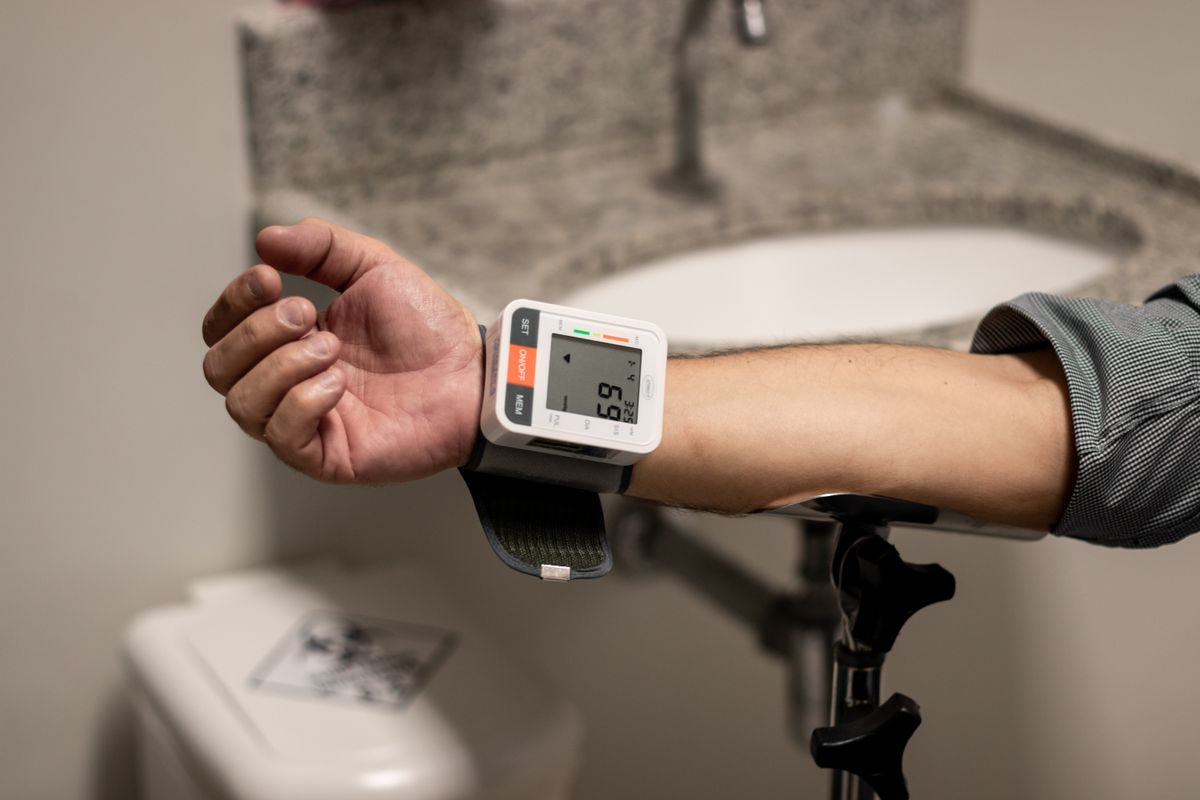
If you have a blood pressure monitor at home, you can use the readings as extra information. But if you already have warning signs, don’t wait to see the numbers. Go to hospital straight away.
Pre-eclampsia doesn’t happen because mom did something wrong. And there’s nothing to be embarrassed about if you get there and the doctor says “you’re fine.” Getting checked and going home with peace of mind is always better than waiting and regretting it later. Take good care of yourself.
Checklist (tick and print)
Tick away, this device will remember.
Symptoms that mean going to hospital right away (don't wait for your appointment)
Just one is enough reason to go. This applies both during pregnancy and after birth.
Questions parents ask
01What are the early symptoms of pre-eclampsia?
In the early stage, many women have no symptoms at all. What's usually found is high blood pressure and protein in the urine at an antenatal checkup. As it gets worse, you may start to get a headache that won't go away, blurred vision, pain under the breastbone, or swelling that comes on fast.
02Are swollen legs in pregnancy a sign of pre-eclampsia?
Mild swelling of the legs and feet at the end of the day is common in the third trimester and doesn't always mean pre-eclampsia. But if the swelling comes on fast, is in your face or hands, or comes with a headache or blurred vision, go to the hospital to have your blood pressure checked right away.
03What blood pressure counts as pre-eclampsia?
Doctors use a threshold of 140/90 mmHg or higher, together with symptoms or other test results such as protein in the urine. A reading of 160/110 or higher is considered severe. Only a doctor can make the diagnosis.
04Can pre-eclampsia happen after giving birth?
Yes. Most cases happen within the first few days after birth, but it can come later, even several weeks after. If after the birth you have a severe headache, blurred vision or shortness of breath, go back to the hospital right away.
05Can pre-eclampsia be prevented?
Not completely, but moms at high risk may be given low-dose aspirin by their doctor from early in pregnancy to lower the risk. Never buy it and take it yourself. A doctor must assess you and prescribe it.
06Is the risk of pre-eclampsia higher in a first pregnancy?
A first pregnancy is one of the risk factors listed by both the NHS and the Faculty of Medicine at Chiang Mai University, along with being 40 or older, carrying twins, existing high blood pressure or diabetes, and having had pre-eclampsia in a previous pregnancy.
Can't find what you're looking for?
Ask us anything about family life in Thailand. No name needed. We read every question, and the ones parents ask most become new guides.