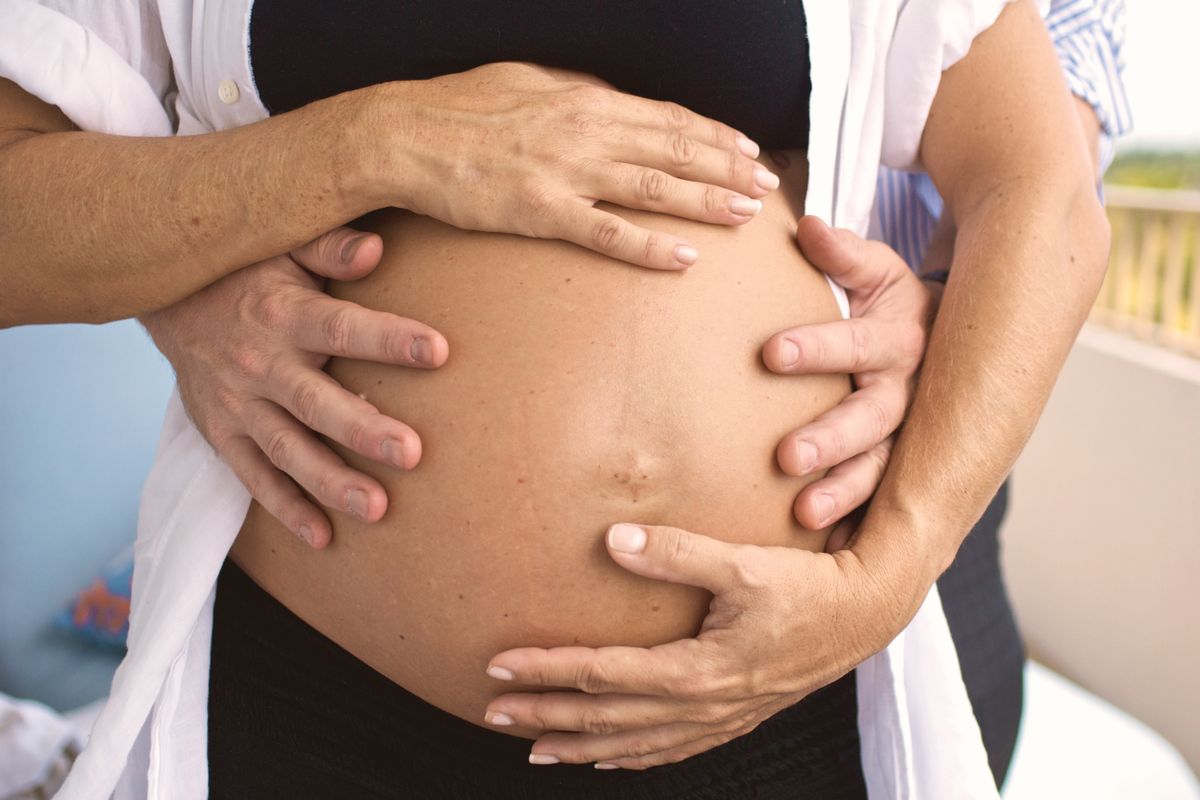
First baby movements: like a fish nibbling, or just gas? Why you feel them later in a first pregnancy
Most moms first feel baby move at around 16 to 24 weeks, and in a first pregnancy it may be after 20 weeks. Early kicks feel faint, like bubbles. If you feel nothing by 24 weeks, tell your doctor.

You’re lying around on your phone when suddenly you feel something like a little nibble low in your belly. It’s there for a second and gone, and you lie completely still waiting to see if it happens again, wondering, “Was that the baby, or just gas?” That first feeling is one of the moments many moms never forget.
But plenty of moms also feel a bit down, because a friend who’s due around the same time posts “Baby’s kicking!” while their own belly is still totally quiet. Don’t worry. Let’s talk about when first movements usually come, what they feel like, why they come later in a first pregnancy, and when you should tell your doctor.
At how many weeks do you first feel the baby move?
Quick Answer: Mostly around 16 to 24 weeks. In a first pregnancy you usually feel it after 20 weeks. In later pregnancies you may feel it from around 16 weeks.
- The NHS says you should start to feel your baby move between 16 and 24 weeks. If it’s your first baby, you may not feel it until after 20 weeks
- Sriphat Medical Center, Faculty of Medicine, Chiang Mai University says you usually start to feel it at around 16 to 20 weeks
- Cleveland Clinic says people who have been pregnant before may feel it at around 16 weeks, while in a first pregnancy it’s usually around 20 weeks
The truth is, your baby starts moving from around 12 weeks (Cleveland Clinic), but at that point they’re so tiny there isn’t enough force for you to feel it. So some moms actually see their baby move on the ultrasound screen before they feel it themselves.
What do first movements feel like? Really like a fish nibbling?
Quick Answer: Really. At first they’re very faint. Thai people often compare it to a fish nibbling, while Westerners compare it to butterflies fluttering or bubbles popping.
Cleveland Clinic has collected the words moms often use, such as:
- A gentle flutter, like a butterfly
- Little bubbles popping
- Gentle tapping or a small thumping
- Gentle rolling or turning over
The NHS explains that at first it’s a gentle swirling or fluttering feeling, which gradually becomes clearer kicks and jerks as your belly grows.
How can you tell baby movements from gas?
Quick Answer: It really is hard to tell at first. Cleveland Clinic acknowledges that many people aren’t sure whether it’s the baby or gas. What helps is sitting or lying still and resting your hand on your belly for a while.
In the second trimester, a pregnant woman’s bowels also slow down, so it’s easy to get bloated, gassy or constipated. The two feelings arrive at exactly the same time. Try noticing these differences:
| More likely the baby | More likely gas or your bowels |
|---|---|
| Gentle nibbling in your lower belly, below the belly button | Felt all over your belly, or higher up toward your stomach |
| Usually clearer when sitting still or lying down to rest | Often comes with stomach rumbling, bloating, or burping or passing gas |
| Happens again in a similar way in about the same spot | Gets better after passing gas or a bowel movement |
| Gradually becomes clearer and more frequent over a few weeks | Comes and goes, and doesn’t get clearer as the pregnancy goes on |
This table is just a guide. If you still can’t tell, that’s fine. In a few more weeks your baby will be moving so clearly you won’t need to guess.
Cleveland Clinic has a small tip that rings very true: sometimes we’re just too busy to notice. Try sitting quietly with your hand on your belly and really focusing on what you feel for several minutes.
Why do you feel it later in a first pregnancy than in a second?
Quick Answer: Because the uterine muscles of someone who has been pregnant before are more relaxed and more sensitive to movement, and mom already knows what the feeling is like.
Cleveland Clinic gives two reasons:
- Uterine muscles that have been through a pregnancy before are usually more relaxed and more sensitive to movement
- Experience: a mom who has been pregnant before knows what to look for. When she feels a gentle nibble, she knows right away, “That’s the baby,” while a first-time mom may think it’s gas at first
So it’s not strange at all if a friend in her second pregnancy says she felt the baby at 16 weeks, while you’re 19 weeks in your first pregnancy and haven’t felt anything. It doesn’t mean anything is wrong. You’re just not starting at the same time.
An anterior placenta can also make you feel it later
Quick Answer: Yes. A placenta at the front acts like a cushion between the baby and your belly, so you may feel movements later and more faintly, but it isn’t dangerous.
Cleveland Clinic explains that an anterior placenta is found in up to about half of pregnancies and doesn’t cause health problems for mom or baby. If the placenta is at the back, you may feel your baby move at around 18 weeks, but if it’s at the front, you may not feel it until around 20 weeks, and movements may feel fainter.
If you want to know where your placenta is, just ask your doctor at your ultrasound, or check the ultrasound results attached in your pink book (the Thai Mother and Child Health Handbook).
Other things can make you feel movements earlier or later too, such as your baby’s position, when your baby is awake or asleep, and the rhythm of your own life. On a day when you’re busy from morning to night, you may not feel anything at all, and then feel it once you finally lie down to rest.
When should you tell your doctor?
Quick Answer: If you’re 24 weeks and have never felt your baby move, tell the doctor or nurse looking after your pregnancy. And if your baby has been moving regularly and then moves less, contact the hospital immediately.
- 24 weeks and never felt anything: the NHS advises telling your pregnancy care team so they can check your baby’s heart and movements. Don’t wait for your appointment if it’s still a long way off
- Your baby has had a regular pattern of movement, but is moving less or differently: contact the hospital immediately, don’t wait until tomorrow. Read the details and how to count in Kick counting in your pink book: why the doctor asks you to record it
- Bleeding, clear fluid leaking from the vagina, severe abdominal pain, or rhythmic tightening of your belly: go to the hospital straight away, whether or not you can feel your baby move
When movements are new, they aren’t regular yet. Some days you’ll feel them and some days you won’t, and that’s normal at this stage. For proper kick counting, most hospitals in Thailand have you start at around 28 weeks. See the big picture of the whole pregnancy in Pregnancy guide, trimester by trimester
Can you do anything to feel your baby move sooner?
Quick Answer: You can’t speed it up, but you can make it easier to notice by sitting or lying still somewhere quiet, resting your hand on your lower belly, and giving yourself some time.
- Choose a time when you’re truly resting, such as before bed
- Lie comfortably on your side (read about recommended positions in Pregnancy sleep positions)
- Invite your partner to put his hand there too. Early on, someone on the outside may not feel anything yet, but in a few more weeks they’ll start to
- Note the date you first felt it in your pink book or on your phone, in case your doctor asks, and to keep as a memory too
Some older relatives may say, “Moving this late, it must be a girl,” or “Kicking this hard, it’s definitely a boy.” Feel free to enjoy it as a bit of fun, but whether movements come early or late can’t tell you your baby’s sex. What really makes a difference is whether it’s your first pregnancy or a later one, where your placenta is, and each person’s own rhythm.
Whether you first feel it at 16 weeks or 22 weeks, that day will come. And when it does, it’ll be the very first hello your baby sends to you alone.
Questions parents ask
01At how many weeks do you first feel the baby move?
Mostly around 16 to 24 weeks. Sriphat Medical Center, Faculty of Medicine, Chiang Mai University, says you usually start to feel it at around 16 to 20 weeks, while the NHS says that in a first pregnancy you may not feel it until after 20 weeks.
02What do first baby movements feel like?
At first they're very faint. Moms often describe them as a fish nibbling, butterflies fluttering, bubbles popping, or something tapping gently inside. Many people can't tell them apart from gas at first, which is normal.
03Why do you feel baby move later in a first pregnancy than in a second?
Cleveland Clinic explains that the uterine muscles of someone who has been pregnant before are usually more relaxed and more sensitive to movement, and mom already knows what the feeling is like. So in a first pregnancy you usually feel it at around 20 weeks, and in later pregnancies maybe at around 16 weeks.
04Does an anterior placenta make you feel movements later?
Yes. A placenta at the front acts like a cushion between the baby and your belly, so you may feel movements a little later and more faintly. An anterior placenta is common and isn't dangerous for mom or baby.
05I'm 20 weeks and haven't felt the baby move. Is that abnormal?
It isn't considered abnormal yet, especially in a first pregnancy or with an anterior placenta. But the NHS advises that if you're 24 weeks and have never felt your baby move, tell your doctor or midwife so they can check your baby's heartbeat and movements.
06Once I've felt the first movements, do I need to start kick counting?
Not yet. Early on, movements aren't regular. Some days you'll feel them and some days you won't. Most hospitals in Thailand have you start recording kick counts at around 28 weeks. But if your baby has been moving regularly and then moves less, contact the hospital immediately.
Can't find what you're looking for?
Ask us anything about family life in Thailand. No name needed. We read every question, and the ones parents ask most become new guides.