Time management for moms running a business: forget the 30-minute schedule and try "energy blocks" instead
30-minute schedules break because babies don't nap by the clock. Match tasks to your energy instead: brain work when you're sharp, hands-on work when you're tired, so a sick day doesn't sink the week.
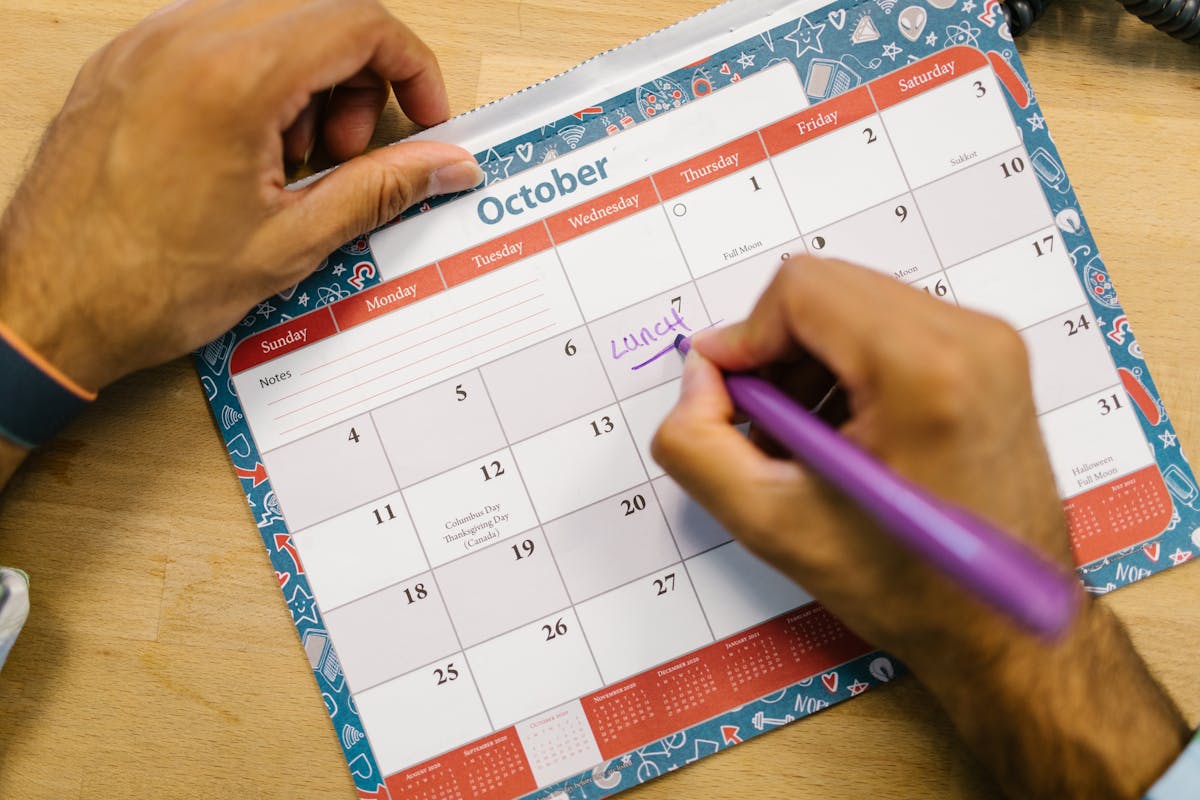
Ever sat down while your baby was asleep and drawn up a beautiful schedule? 9:00 product photos, 9:30 reply to chats, 10:00 post. Then the real morning comes, baby wakes at 8:40, cranky because a tooth is coming through, the schedule breaks at the very first slot, and you spend the whole day feeling guilty, asking yourself “why can’t I get myself together?”
Let us say this first: it’s not that you lack discipline. The 30-minute-slot schedule was designed for people who control their own time, and moms of little kids are not in that group at all. So we’d like you to try a more flexible way: organizing your work by “energy blocks” instead of by the clock.
Why 30-minute schedules keep breaking for moms of little kids
Quick Answer: Because they tie tasks to times, but a mom’s free time doesn’t arrive by the clock, and your energy isn’t the same at every point in the day.
This kind of schedule breaks in three ways:
- Kids don’t sleep on schedule. Daytime naps can shift every day, especially when they’re sick or going through a developmental change.
- Not every hour is equal. An hour after a full night’s sleep and an hour after getting up to feed three times are good for completely different kinds of work.
- When one slot breaks, the rest go with it. You don’t just lose 30 minutes, you lose your motivation for the whole day.
The Harvard Business Review article “Manage Your Energy, Not Your Time” argued back in 2007 that time is limited and the same for everyone, but energy is something we can look after and allocate. Reading it, we thought straight away of life with little kids.
What “energy blocks” are, and how they replace a schedule
Quick Answer: You split the day into high, medium and low energy stretches, then choose work that matches the energy you have right then, instead of deciding what to do at what time.
Imagine you have three kinds of energy in a day:
| Energy block | How it feels | Suits what kind of work |
|---|---|---|
| High (mind is sharp) | Ideas come, you can make decisions, not very irritable | Brain work |
| Medium (getting by) | You can work, but don’t want to think hard | Middle work |
| Low (drained, but hands are free) | Sleepy, foggy, but can still sit | Hands-on work, or rest |
Everyone’s sharp time is different. For some it’s in the morning after the first coffee, for some it’s during baby’s first daytime nap, and for some it comes at 9 p.m. after the kids are asleep. None of these is wrong.
How to split your business tasks into 3 piles
Quick Answer: Write down every task in your business, then sort them into brain work, middle work and hands-on work. When you get free time, grab from the pile that matches your energy right then.
Here’s an example for a mom who sells online:
Brain work pile (needs full focus)
- Coming up with new products, setting prices, working out costs
- Writing sales captions or video scripts
- Planning next month’s promotions
- Bookkeeping, filling in tax forms
Middle work pile (needs care, but no new thinking)
- Replying to customer chats
- Photographing products to a plan you’ve already made
- Listing products in your shop, filling in details
- Simple video editing
Hands-on pile (doable even when your brain is foggy)
- Packing orders, sticking on shipping labels
- Counting stock
- Scheduling posts you’ve already prepared
- Tidying your desk, washing equipment
The trick is to do tasks from the same pile in one go, as a batch. For example, photograph the whole week’s products in one session instead of one a day, because switching tasks has a cost. The American Psychological Association (APA) sums up research showing that switching tasks often can cost you a lot of productive time. Moms already get interrupted by their kids constantly, so don’t add another layer by switching tasks yourself.
How to find your own energy blocks in 7 days
Quick Answer: For 1 week, jot down 3 times a day whether your energy is high, medium or low, then look for which stretches repeat most often.
You don’t need to download any app. A note on your phone is enough.
- Note it 3 times a day, morning, afternoon, evening. Just write “high/medium/low” and what happened, e.g. “afternoon, low, baby up at 3 a.m.”
- Note when you were actually free, how many minutes and when (not when you wish you were free).
- After 7 days, look at the pattern. Most people find they only have 1 short high-energy stretch a day.
- Protect that stretch for brain work only. Don’t spend it replying to chats or scrolling your feed.
After keeping notes for a while, many moms of little kids find their real working time adds up to only about 5 to 10 hours a week. If you can’t yet picture what kind of business fits that much time, try our Income Finder (in Thai). Answer 4 questions about your time, skills, budget and help with childcare, and you’ll get a path you can start right away.
What a mom’s day looks like with energy blocks
Quick Answer: No exact times, just “if this stretch comes up, do work from this pile,” and goals set by the week instead of by the day.
Say you’re a mom selling secondhand kids’ clothes, with a 1-year-old:
| What happens | Energy | Grab work from the pile |
|---|---|---|
| Baby’s morning nap (about 40 minutes to 1 hour) | High | Write 3 captions for the week, price a new batch |
| Baby plays on their own nearby | Medium | Reply to customer chats, photograph 5 items |
| Baby’s afternoon nap, but you’re wiped out | Low | Pack 4 orders, or lie down and rest too |
| After baby goes to bed | Depends on the day | If you can still manage, list products in your shop. If not, switch off your phone and go to sleep |
Weekly goals, like “list 10 new items, ship every order within 2 days, post 3 times,” are much more flexible than daily ones. On a day your child is sick, you can make it up on another day, without feeling like you’ve failed.
If you already sell on Shopee or are about to open a shop, listing products and setting up your shop are perfect medium-energy tasks. See the steps in Opening your Shopee shop: day one.
What to do on days when everything falls apart
Quick Answer: Have a “bad day plan” ready: a minimum list of tasks that keeps the business from stalling, like replying to chats and shipping outstanding orders. Everything else can move to another day.
Days when your child is unwell, the power goes out, or you didn’t sleep all night will definitely come, sooner or later. Better to prepare for them.
- 2 minimum tasks. Usually that’s replying to customers and shipping orders that have been paid for.
- An auto-reply message, e.g. “Admin is a bit slow to reply today. All orders ship within 2 days.”
- Set a shipping window that doesn’t squeeze you. If you tell customers you ship within 2 days and you ship in one, they’ll be impressed. If you say one day and ship in two, they’ll be disappointed.
And don’t forget to talk with the people at home. Ask for 2 to 3 stretches a week when nobody will interrupt you for sure, for example having your husband or grandma take the kids for a walk after dinner. The Physical Therapy Center at Mahidol University recommends sharing out family responsibilities as one of the first ways to look after yourself when you feel burned out. Don’t feel guilty about asking for help.
When to rest instead of pushing through
Quick Answer: If you got very little sleep the night before, or you keep making mistakes, resting pays off more. And if you feel tired or sad for several weeks in a row, talk to a doctor.
The NHS advises new moms to rest when the baby sleeps instead of rushing to do housework, and to ask the people around them for help. This applies to business work too. Work done when you’re exhausted often has to be redone: a wrong price here, swapped parcels there, and in the end it takes more time than before.
If you notice signs like these, stop and look after yourself first:
- You can’t sleep even when you have the chance
- You’re tired all the time, or snapping at your child more than usual
- You feel sad, or no longer enjoy things you used to, for several weeks in a row
If you have these symptoms, talk to your doctor or the nurse who looks after you after the birth, or call the Thai mental health hotline on 1323, open 24 hours. UNICEF Thailand also stresses that looking after yourself isn’t a luxury, it’s something parents need.
If you’d like to read more about starting a business while raising kids, have a look at 7 beliefs moms should know about before opening their first shop and Home business ideas for moms, based on the time you really have.
A mom’s business doesn’t have to grow as fast as possible. As long as it keeps growing while you can still cope, that’s already amazing.
Questions parents ask
01How should a work-from-home mom plan her time?
Start by watching yourself for 1 week to see when your mind is sharp and when you're tired. Then split your tasks into 3 piles: brain work, middle work and hands-on work. Then match tasks to your energy instead of locking them into time slots.
02What are energy blocks?
It means seeing your day as stretches of high, medium and low energy instead of minutes, and choosing work that suits each stretch. For example, write sales captions when your mind is sharp, and pack orders when you're tired but your hands are free.
03My child doesn't nap on schedule. How can I get any work done?
Don't tie tasks to times. Keep a short list of tasks from each pile ready, so whenever your child falls asleep you can grab a task that matches your energy right then, without wasting time deciding what to do.
04How many hours a day is enough to run a business from home?
There's no fixed number. Many moms of little kids really have about 5 to 10 hours a week. More important than the number of hours is choosing a business you can run in the time you actually have.
05Should I work while my child naps, or rest too?
If you got very little sleep the night before, resting usually pays off more, because work done when you're exhausted is slow and error-prone. The NHS advises new moms to rest when the baby sleeps and to ask the people at home for help.
06I feel burned out from raising kids and running a business. What should I do?
Lower your targets for a while, share housework and childcare with the people at home, and get enough rest. If you can't sleep even when you have the chance, or you feel sad or exhausted for several weeks in a row, talk to a doctor or call the Thai mental health hotline on 1323.
Can't find what you're looking for?
Ask us anything about family life in Thailand. No name needed. We read every question, and the ones parents ask most become new guides.
Sources
- Harvard Business Review: Manage Your Energy, Not Your Time (Schwartz & McCarthy, 2007)
- American Psychological Association: Multitasking: Switching costs
- NHS: Sleep and tiredness after having a baby
- Physical Therapy Center, Faculty of Physical Therapy, Mahidol University: Recharging parents, 5 ways to look after yourself when you feel burned out
- UNICEF Thailand: Ways to reduce stress that every parent can do